Boise voters weigh record spending in historic midterm
As polls open across Ada County, national data reveals a stark split in fundraising strategies between party committees and individual candidates.
By Samantha Reed ·
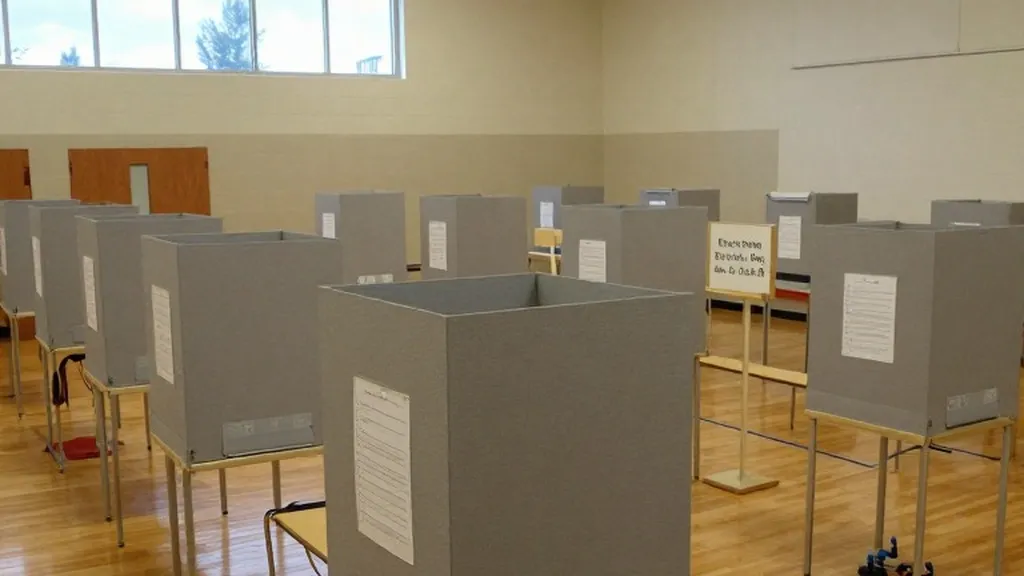
Polls across Boise, Meridian, Nampa, and Caldwell opened at 8 a.m. local time on Tuesday, November 3, 2026, marking the start of a critical day in Idaho politics. The state is divided between the Mountain and Pacific Time Zones, with voting continuing until 8 p.m. in the east and 8 p.m. in the west, though some locations may adjust hours at the discretion of the county clerk. Idaho is one of 36 states holding governor races, with incumbent Brad Little seeking re-election. The ballot also includes the U.S. Senate race, where incumbent Jim Risch is running for another term, and every U.S. House seat in the state. Voters in Ada County are deciding the future of state executive power and their federal representation in a midterm election that is halfway through President Donald Trump's second term.
The financial landscape of this election is unlike any previous cycle. According to an analysis by the Associated Press of data from AdImpact, the 2026 elections are likely to be the most expensive in history. This surge in spending reflects the high stakes involved, as the results will determine which party controls Congress for the final two years of the current presidential term. The sheer volume of money raised and spent underscores the intensity of the competition for the 435 U.S. House seats and the 35 Senate seats up for election. For voters in Boise, the national spending war has local implications, as campaigns target specific demographics and districts with precision.
A detailed look at the money reveals a complex dynamic between party committees and individual candidates. The Associated Press reports that Republican committees have outraised and outspent their Democratic counterparts. This advantage was fueled by contributions from Trump-affiliated groups and significant support from tech billionaire Elon Musk. However, the picture changes when looking at the individual level. Democrats have outraised their Republican opponents at the candidate level. This discrepancy highlights a strategic divergence, where Republican efforts are centralized through party committees, while Democratic resources are more distributed among specific candidates running for office.
The allocation of this spending further illustrates the strategic focus of the Republican committees. The AP analysis indicates that 88.1 percent of Republican general election television ad spending went to states and districts that Donald Trump won in the 2024 election. A significant portion of this money, totaling more than 850 million dollars, was spent in areas where Trump won by a margin of 10 points or more. This heavy investment in safe Republican territory suggests a strategy focused on maximizing turnout and reinforcing party loyalty in strongholds. For Idaho, which is considered a Republican-leaning state, this national trend aligns with local expectations of high Republican engagement.
In contrast, the Democratic candidate-level edge suggests a different approach. By focusing resources on specific individuals, Democrats may be attempting to build personal brand recognition and appeal to voters beyond party labels. This strategy could be particularly relevant in competitive districts or states where personal appeal outweighs party affiliation. The national mood, as described by the AP, is one of a referendum on Trump's second term, with voters struggling with high prices and anger over an unpopular war with Iran. The spending patterns reflect these tensions, with both parties attempting to connect with voters through targeted messaging and substantial financial backing.
Idaho voters are also deciding on several statewide ballot measures that reflect local priorities. One measure, HJR 4, would provide that only the state legislature has the authority to legalize marijuana, narcotics, or other psychoactive substances. Another, HJR 6, seeks to add constitutional language designating English as the official language of Idaho. There is also a question asking voters to choose the official state gun of Idaho. These issues, combined with the selection of judges for the State Supreme Court and intermediate appellate courts, make this a comprehensive vote on the direction of the state. The presence of these local measures adds another layer to the decision-making process for voters in Boise and surrounding communities.
The election is being watched closely by national political observers. The AP notes that Republicans are bracing for the possibility of losing the House while fighting to hold the Senate. Democrats, meanwhile, are described as cautiously optimistic. The outcome of the House race is particularly tight, with Democrats needing a net gain of three districts to secure a majority. Republicans can afford to lose no more than two seats. In the Senate, Democrats need a net gain of four seats to take control, while Republicans can only afford to lose two. These narrow margins mean that every vote, including those cast in Idaho, carries significant weight in the national calculus.
Voters across the state are heading to polling places with a range of issues in mind. The AP-NORC polling indicates that 35 percent of U.S. adults approve of Trump's job performance, while about seven in ten say the country is heading in the wrong direction. Most of those who are critical blame the president for high prices. This economic anxiety is a central theme of the campaign, with both parties emphasizing their plans to address the cost of living. For Idaho residents, who are dealing with rising costs in housing and healthcare, these national trends resonate deeply. The election is not just about party control but about the practical impact of political decisions on daily life.
The administration of the election is also a point of focus. A federal judge temporarily barred the Trump administration from carrying out a plan to prevent noncitizen voting, a move that critics say risks disenfranchising eligible voters. This legal battle adds another layer of complexity to an already contentious election. The U.S. Postal Service has added hours and staff to ensure that mail ballots are counted on time, a critical step in a state where mail voting is a common practice. These logistical efforts are essential to ensuring that every vote is counted and that the election process runs smoothly.