Israel Votes in Contested Knesset Race
Polls indicate a tight split between rival blocs, with neither side projecting a majority of the 120 parliamentary seats.
By Aiko Nakamura ·
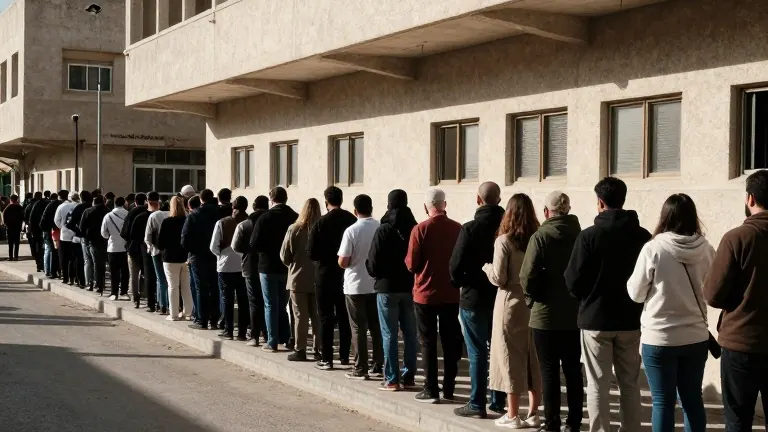
Israelis cast ballots on Tuesday in a national election where neither the ruling right-wing bloc nor the opposition alliance is projected to secure a majority. The race for the 120 seats in the Knesset has produced a statistical stalemate, leaving the next government's composition uncertain.
Polling data from right-leaning and left-leaning institutions diverges on the final margin, but most surveys show no side winning the 61 seats required to form a government unilaterally. This narrow gap suggests that post-election negotiations will be complex and potentially lengthy.
Benjamin Netanyahu, the incumbent prime minister, leads the right-wing and religious coalition. His campaign argues that only he can form a government without relying on Arab parties, which he views as a strategic risk during ongoing conflicts. Netanyahu also contends that he requires additional time to complete military operations in Gaza, Lebanon, and Iran.
President Donald Trump endorsed Netanyahu's candidacy last week, stating that if Israel elects a different leader, the United States might have to conduct its own military actions against Iran. Trump expressed a preference for Netanyahu remaining in power to manage the regional threat.
The leading candidate to assemble an opposition government is Gadi Eisenkot, head of the centrist Yashar party. Eisenkot, a former military chief, lost family members in the war and has served in the war cabinet. His platform includes establishing a state inquiry into the intelligence failures that preceded the October 7, 2023, attacks by Hamas.
Eisenkot criticized Netanyahu's campaign for using fear-based messaging, specifically referencing an artificial intelligence-generated image of a nuclear explosion over Tel Aviv that Netanyahu posted on social media. The opposition bloc consists of a diverse group of Arab, right, left, and center parties united primarily by their desire to remove Netanyahu from office.
Voter turnout among Arab Israelis, who comprise roughly 20 percent of the population, is a critical variable. Jehad Abomoch, a cafe owner in Baqa al Gharbiya, noted that many in his community are motivated to vote to prevent a fourth term under Netanyahu, describing the past four years as a social and military catastrophe.
Two new parties entering the election are focused on drafting ultra-Orthodox men into military service, a policy that challenges Netanyahu's current coalition partners. If neither major bloc secures a majority, the country faces a choice between a minority government or new elections, a scenario that has occurred multiple times between 2019 and 2022.
Source: CBS News