Eisenkot leads polls as Israelis vote with 65 percent of Gaza under Israeli control
Gaza residents say their daily reality will likely remain unchanged regardless of the outcome, citing near-daily strikes and a severe goods shortage.
By Justin Brooks ·
Israeli forces currently hold approximately 65 percent of the Gaza Strip. This area, designated as the "Yellow Line," remains under direct military occupation as voters across Israel cast ballots on Tuesday. The territorial control figure serves as a baseline for many residents in Gaza who are tracking the election results with a combination of anxiety and limited optimism.
The conflict has shaped the political landscape for this vote. Prime Minister Benjamin Netanyahu faces intense scrutiny over the security failures preceding the October 7, 2023 attacks. His far-right coalition partners have pushed for a harder stance, including calls to expel the Palestinian population. Gadi Eisenkot, a former military commander, is Netanyahu's primary challenger in this race.
Mohammed Eliyan, 36, lives in Deir el-Balah with his five children after being displaced from the Jabalia refugee camp. He supports Eisenkot and fears that a second term for the Likud party would lead to further displacement. Despite his preference, Eliyan does not anticipate a drastic improvement in conditions. "They are still our enemy, and I don't expect things to improve dramatically," he said. He hopes the next government will simply be "less harsh."
Islam Salem, 41, resides in Deir el-Balah with his three daughters, having been displaced from Beit Lahiya. He believes the election outcome will likely worsen his children's prospects. Salem argues that the voting process primarily serves Israeli interests and that the strategic approach to Gaza will remain consistent under any administration. He pointed to the 65 percent territorial control and doubted that reconstruction efforts would begin in the near future.
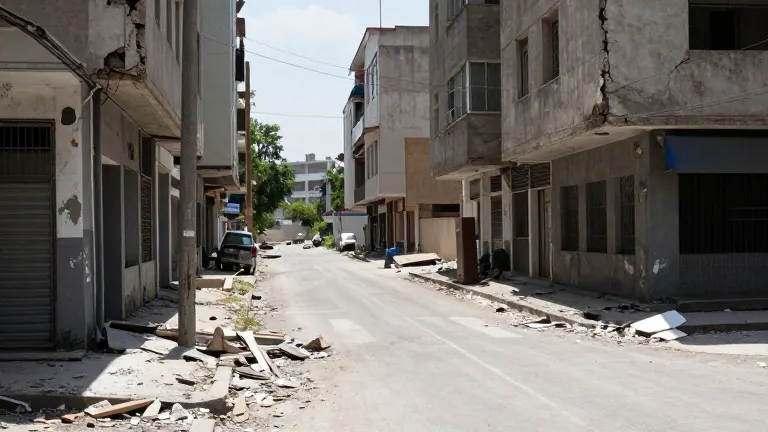
The physical damage in the territory is extensive. More than 80 percent of buildings in Gaza have sustained damage. Approximately two-thirds of those damaged structures are completely destroyed. Salem summarized the current living situation with a simple observation: "We live day by day. Everything we feared has already happened."
Hanan Abu al-Maaza, 57, has been displaced more than 12 times since the war began. Her interest in the vote is driven by fear of worse treatment from the incoming government. She believes a loss for Netanyahu offers a better chance for her to return to her home in Beit Lahiya. "We have had enough of war and destruction," she stated. "There is nothing left to destroy, yet the suffering continues."
Manar Owaida, 23, is currently in the Tal al-Hawa neighborhood of Gaza City. Originally from the north, she views Netanyahu as more extreme than his rival. She suggested that a new government might ease the blockade and withdraw from areas beyond the Yellow Line. Her primary concern is that Netanyahu might initiate a wider regional war to alleviate domestic political pressure surrounding the election.
Mousa Ali, 33, a father of four from Beit Lahiya, sees the election as critical for the future of displaced populations. He is interested in the performance of Arab parties and hopes they secure a role in the next government. Ali expects that a Netanyahu victory would prolong the displacement and maintain the current control around the Yellow Line. The shared appeal from these residents is for the next leader to end the war and stop the bloodshed.
"We hope this policy will end and that a new prime minister will stop this ongoing bloodshed," Ali said. The ceasefire has been in place since October 2025, but residents report that air strikes occur on a near-daily basis. The siege continues to limit the supply of basic goods, creating a harsh living environment that voters say remains largely independent of the political outcome.
Source: Al Jazeera