Lula Clinches Historic Fourth Term: Brazilian President Defies Odds to Retain Power
Luiz Inácio Lula da Silva secured 51.79% of the vote in a tight runoff, becoming the first president since 1985 to win after losing the initial round of voting.
By Justin Brooks ·
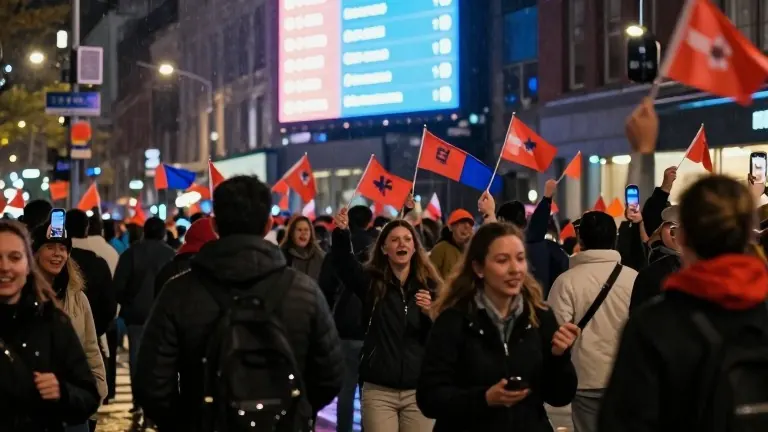
Luiz Inácio Lula da Silva stood before cheering crowds in São Paulo on Sunday night to announce his return to the presidency for a fourth term. The 81-year-old leader, who will turn the age on Tuesday, defeated right-wing challenger Flávio Bolsonaro with 51.79% of the vote. Bolsonaro captured 48.21%, a margin of 4.4 million votes that sealed Lula’s comeback in a race that experts had initially projected in favor of the younger candidate.
The victory marks a historic shift in Brazilian politics. Lula becomes the first president since the return to civilian rule in 1985 to win a presidential election after losing the first round. In the October 4 runoff, Flávio Bolsonaro had led with 47% of the vote against Lula’s 45%. However, the former metal worker’s campaign focused on boosting turnout after 33 million people abstained in the first round. Sunday’s election saw the largest drop in abstention rates between two rounds since 1989, giving Lula’s camp the momentum needed to close the gap.
The election night was marked by procedural drama and legal challenges. Polling stations were extended by two hours on Sunday evening, a decision issued by the Supreme Court just as polls were due to close. Lula’s team argued that a lack of buses prevented voters in São Paulo and Bahia from reaching their stations. Flávio Bolsonaro’s campaign cited heavy rain in the south and São Paulo as the cause. The extension meant some stations that had already shut could not reopen. Supreme Court President Kassio Nunes Marques, appointed by Jair Bolsonaro, confirmed the result and stated that the delay did not affect the electoral count.
Flávio Bolsonaro, the son of convicted former president Jair Bolsonaro, refused to recognize the outcome immediately. He described the result as "inexplicable" and "impossible," calling for it to be annulled. Jair Bolsonaro, who is serving a 27-year prison sentence for a coup attempt, had supported his son’s campaign and met with US President Donald Trump earlier this year. Despite the protests, legal experts noted the remote chances of annulment. Fernando Neisser of the Institute of Lawyers of São Paulo said the large margin made a legal challenge "difficult from a legal standpoint." Alberto Rollo added that constitutional fixed dates for presidential elections would further complicate any attempt to overturn the vote.
Lula’s new term, which begins on January 5 and lasts until 2030, arrives amid domestic constraints and international tension. The president addressed the ongoing rivalry with the United States, specifically referencing what Trump calls the "Donroe Doctrine," which seeks US dominance in the Western Hemisphere. Lula insisted that Brazil "will not accept being anyone's backyard." While Trump has not yet reacted, other world leaders have offered congratulations. Ecuador President Daniel Noboa Azin spoke of shared challenges, and European Commission President Ursula von der Leyen stated that "democracy and multilateralism" had won. Spanish Prime Minister Pedro Sánchez called the result a "great victory" for global progressivism.
Lula’s win also bucked a regional trend in Latin America, where voters in Argentina, Chile, and Colombia have recently installed right-wing leaders. Vice-President Geraldo Alckmin told Lula, "You, for the second time, have saved Brazilian democracy." Lula responded by calling his fourth term "the best of any president in the history of this country." He promised it would be the term in which he "listen[s] most to the Brazilian people," ending his speech with the declaration "long live democracy." As disappointed supporters left the watch party in Brasília, Lula took to the streets to mark his historic retention of power.
Source: BBC News