Two journalists killed in Lebanon despite ceasefire
A missile strike in southern Lebanon killed veteran reporter Amal Khalil and left photojournalist Zeinab Faraj trapped under rubble for hours.
By Aiko Nakamura ·
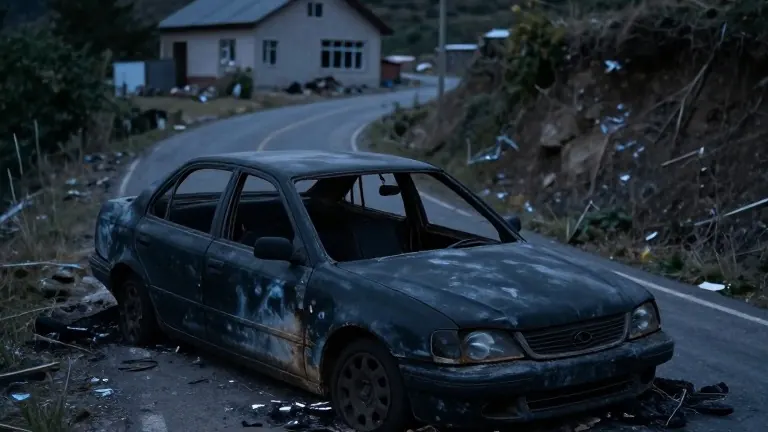
On the afternoon of April 22, a missile struck a car in the village of al-Tiri, killing two men and wounding two female journalists who were documenting the aftermath of recent airstrikes in southern Lebanon. Amal Khalil, 42, a newspaper reporter, and Zeinab Faraj, 21, a photojournalist, were traveling with Ali Nabil Bazzi, 27, a municipal official, and Mohammed Hourani, 37, a friend of the mayor. The group had met earlier that day at Tebnine governmental hospital, a location residents considered relatively safe.
Faraj described hearing Khalil scream before the car ahead of them caught fire. The two women exited their vehicle to assess the damage. Khalil repeatedly stated, "Oh God, they’re gone." Faraj observed that the bodies of Bazzi and Hourani were torn apart. Drones then appeared, flying low and close to the women. Faraj noted that the drones descended toward her face, forcing her to cover her head. She tried calling emergency services, which assured them help was arriving, but the assurances felt like an anesthetic because no rescuers were visible.
While attempting to re-enter their car, a second missile struck the vehicle. Both women were thrown backward. Khalil wrapped her arms around Faraj. As they sought shelter in a nearby house, Faraj sent a message to her sister: "There’s no hope left. Forgive me." Inside the building, they sat on a bathroom floor. Faraj crawled to a position where she could watch the road. A drone descended suddenly, and Faraj said her heart stopped. Shortly after, another missile hit the area, trapping Faraj under rubble.
Faraj remained conscious and heard a voice. It was a paramedic who had reached the scene. He held her shoulders while a second paramedic cleared the debris. Faraj clung to him, saying, "Don’t leave me. I’m afraid to stay alone." A stun grenade was dropped by a drone as they were pulled from the rubble. Faraj was transported to a hospital, where she learned that Khalil had died approximately an hour before the paramedics were permitted to return to the area.
The Israeli military stated that the attack targeted saboteurs violating the ceasefire. Human rights groups called the incident a war crime. The military had previously described a video of Khalil published by her newspaper as "terrorist media" and she had received death threats from Israeli numbers. Faraj is now preparing to return to university. She suffers from visible injuries to her hand and face, and a limp that makes climbing stairs difficult. She wakes screaming at night and remains haunted by the image of Hourani’s open eyes.
Khalil is believed to have died about an hour before the paramedics rescued Faraj. Faraj’s injuries include a visible mark on her hand and a facial injury that affects the movement of one eyebrow. She continues to struggle with the physical and psychological effects of the attack.
Source: The Guardian