Saddam Haftar Seeks Libyan Presidency
A swift ratification of a maritime deal in Benghazi clears the path for the son of the eastern commander to enter US-brokered power-sharing talks.
By Samantha Reed ·
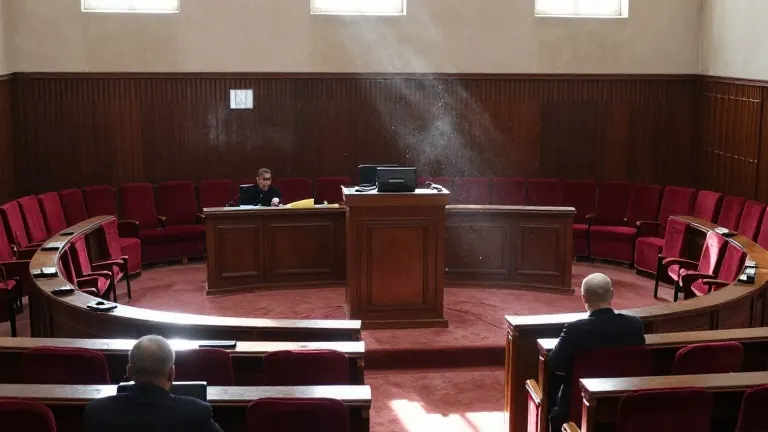
Saddam Haftar has moved to secure the Libyan presidency by trading away a maritime agreement that his faction opposed for seven years. On October 20, the House of Representatives in Benghazi voted to ratify the memorandum of understanding between Tripoli and Ankara. The vote reversed a long-standing stance that had defined eastern Libya’s foreign policy for nearly a decade.
The ratification drew immediate condemnation from the European Union, Greece, Israel, and Egypt. These nations viewed the deal as a concession to Turkish influence in the Mediterranean. However, the move serves as a calculated step in a larger political maneuver orchestrated by Saddam Haftar, the son of Khalifa Haftar, the military commander who controls eastern Libya.
The United States is currently attempting to broker a power-sharing arrangement between the rival capitals. Massad Boulos, the senior adviser for Arab and African affairs to President Donald Trump, champions this deal. The proposal could install Saddam as the country’s president. To achieve this, he requires the backing of Ankara, whose influence in western Libya gives it a decisive voice in any settlement. The maritime ratification is designed to secure that Turkish approval.
The campaign for the presidency began with a palace coup two weeks before the October 20 vote. The House of Representatives removed its speaker, Aguila Saleh, after he had held the position for 12 years. Saleh was a principal ally of Cairo and a stubborn obstacle to the maritime deal. He also represented the de jure authority from which Khalifa Haftar’s military command derived its legitimacy.
Saleh’s successor, Al-Salhin Abdulnabi, is a member of the same Obeidat tribe and had previously chaired the Libyan-Turkish friendship committee. His appointment aims to defuse tribal backlash while signaling the chamber’s new direction. This removal clears the path for a power handover that Khalifa Haftar’s advanced age could hasten at any moment. Saddam is counting on the Trump administration’s desire for a deal, a goal sharpened by lobbying from Turkish and Emirati officials and by the personal rapport between President Erdogan and President Trump.
Abu Dhabi supports Saddam’s bid because he has been the most loyal of Khalifa’s sons to the Emiratis. Installing him would cap a decade of investment in the Haftar project. A maritime line drawn in Ankara’s favor is considered a modest price for that outcome. Egypt remains the primary variable, having objected to the memorandum’s encroachment on its exclusive economic zone. Cairo’s legal framing suggests it is keeping political options open.
Cairo could leverage its improved relationship with Ankara to champion an alternative heir. Saddam’s brother Khaled, the chief of staff for the Libyan Arab Armed Forces, is closer to Cairo and publicly criticized the US initiative in April. If Cairo pushes Khaled, Saddam would have traded away his most valuable chip with the Turks. He would be left with few bargaining cards, squeezed between a patron in Abu Dhabi he cannot cross and a partner in Ankara that has already received its reward. The alternative to an institutionalized succession is a contest that could be decided violently by siblings or excluded constituencies.
Source: Al Jazeera