Idaho voters deliver national wave as Democrats flip 41 House seats
The Boise area joins a national trend as Idaho's congressional delegation faces a historic shift amid a 250-157 Democratic majority in the U.S. House.
By Justin Brooks ·
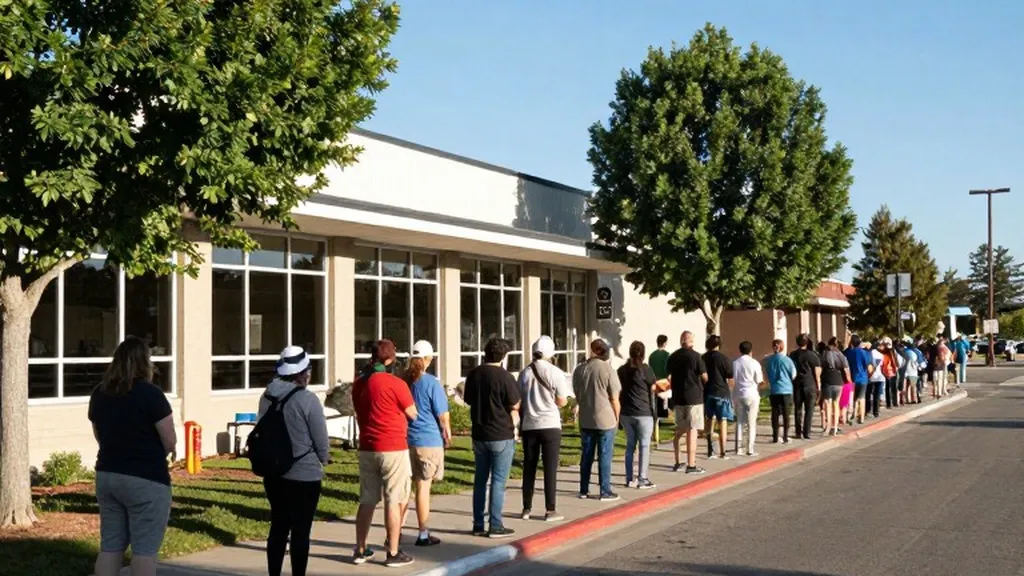
The political landscape across Boise, Meridian, Nampa, and Caldwell has shifted dramatically following the conclusion of the 2026 midterm elections. While local polling places in Ada County closed their doors at 8 p.m. on Tuesday, the results from these towns reflect a broader national realignment that has reshaped the balance of power in Washington. Idaho voters participated in a historic election cycle where every U.S. House seat in the state was on the ballot, alongside high-stakes races for the U.S. Senate and the governorship. The outcome in the Treasure Valley mirrors the national trend, with a significant swing that aligns with the broader Democratic gains seen across the country.
In the state of Idaho, the election featured a competitive U.S. Senate race with incumbent Jim Risch, a Republican, seeking to retain his seat. The gubernatorial race saw incumbent Brad Little, also a Republican, running for a second term against a field of candidates from the Democratic, Independent, Libertarian, Republican, and Unaffiliated parties. These state-level contests were part of a larger slate that included state supreme court elections, intermediate appellate court seats, and various school board and municipal government positions. The results from these local and state races contribute to the overall picture of a electorate that has moved decisively in one direction.
Nationally, the U.S. House of Representatives has undergone its most significant change in decades. Prior to the election, Republicans held 219 seats while Democrats held 215, with one independent and two seats still uncalled as of the final updates. The final tally shows a decisive shift, with Democrats securing at least 250 seats and Republicans holding at least 157. This results in a net change of 41 seats in favor of the Democratic Party. The margin of victory for the Democrats is a three-seat difference from the exact majority needed to maintain control, but the scale of the turnover is unprecedented in modern history.
The shift was driven by performance in 46 battleground districts where the outcome was closely watched by political analysts. In these competitive areas, the new maps drawn in seven states played a crucial role in determining which candidates had the best chance of winning. The redistricting efforts in these states created a complex landscape that tested the resilience of both parties. The results in these districts highlight how voter alignment has changed in response to national issues and local concerns, leading to a comprehensive restructuring of the chamber.
The 218 to 214 split that characterized the pre-election balance has been completely erased by the final results. The new composition of the House will have immediate implications for the legislative agenda, as the party in power can now pass legislation with a broader base of support. The three-seat margin in the final count underscores the competitive nature of the race, but the net gain of 41 seats indicates a strong mandate from the American public. This level of turnover is rare and signals a significant shift in the political mood of the nation.
The impact of the election extends beyond the federal level, affecting state governments across the country. Democrats won a majority of governorships for the first time since before the 2010 elections, with 22 victories compared to 12 for Republicans. This shift in executive power at the state level will influence policy decisions in areas such as education, infrastructure, and healthcare. The results in Idaho, where the governor's race was a key contest, are part of this broader trend of Democratic success in state leadership positions.
The election also saw changes in state legislative chambers, with Democrats winning 46 chambers and Republicans winning 39. This shift in legislative control will affect the ability of state governments to pass laws and manage budgets. The results in Ada County, which includes the major cities of Boise, Meridian, Nampa, and Caldwell, are indicative of the state's overall political direction. The combination of federal and state results paints a picture of a electorate that has favored one party across multiple levels of government.
The national picture is one of a wave election, defined by the significant net loss of seats by the president's party. Republicans' net loss of 42 Senate seats places this election in the top 20% of election years in terms of seat swings. While the House has not yet reached the same threshold for a wave election, the scale of the change is substantial. The results in Idaho, with its competitive Senate and gubernatorial races, are a microcosm of the national trend, reflecting a electorate that has made a clear choice in the 2026 midterm elections.
The implications of these results will be felt for years to come, as the new Congress begins its work. The shift in power will affect the legislative process, the confirmation of appointments, and the overall direction of the country. The results in Boise and the surrounding areas are a testament to the importance of local elections in shaping the national landscape. The 2026 midterm elections have marked a turning point in American politics, with a clear mandate for change that will guide the actions of elected officials in the coming years.
As the final results are tallied, the political landscape in Idaho and across the nation has been transformed. The shift from a Republican-controlled Congress to a Democratic one is a significant development that will shape the future of American governance. The results in the Treasure Valley, including Boise, Meridian, Nampa, and Caldwell, are a key part of this national story, reflecting the choices made by voters in one of Idaho's most populous and influential regions.