Idaho voters choose Risch, Little as Democrats sweep national midterms
Polls in Boise, Meridian, Nampa, and Caldwell closed at 8 p.m. Tuesday, with local voters deciding on state leadership while Democrats gained majorities in Congress.
By Justin Brooks ·
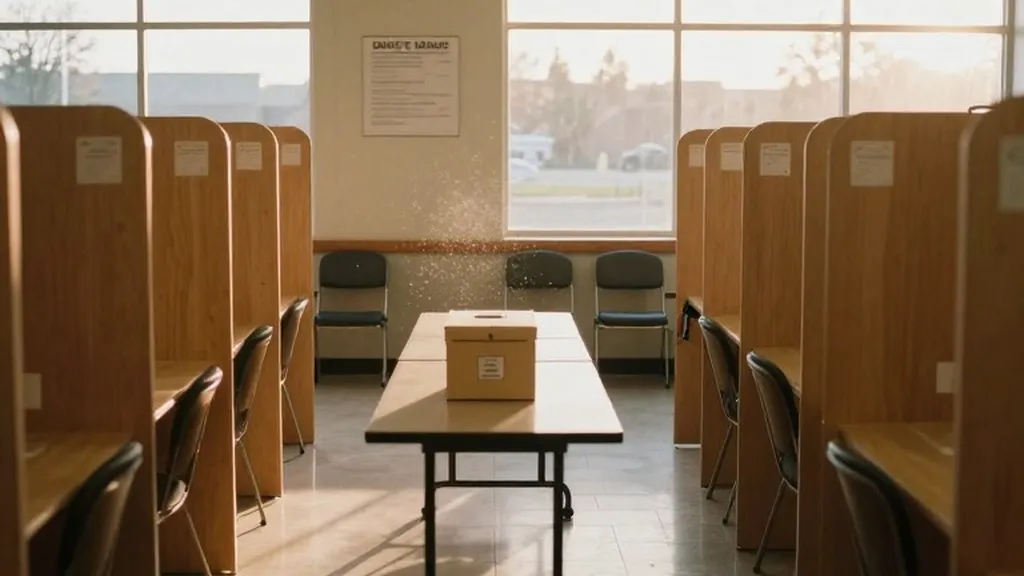
Voters in Boise County cast their ballots Tuesday, November 3, 2026, in a general election that featured high stakes for state leadership and a decisive shift in national power. Polling places in Boise, Meridian, Nampa, and Caldwell were open from 8 a.m. to 8 p.m., allowing residents to participate in the selection of federal, state, and local officials. The election day saw significant activity as the community turned out to decide the next four years of Idaho governance and the composition of the U.S. Congress.
On the state ballot, Idahoans voted for the incumbent U.S. Senator Jim Risch, a Republican, who faced challengers from the Independent and Libertarian parties. The race for governor also featured the incumbent, Brad Little, a Republican, running against candidates from the Democratic, Independent, Libertarian, and Unaffiliated parties. These statewide races were the central focus for local voters, determining who would hold the state's two most powerful executive and legislative positions in the coming term.
In addition to the top of the ticket, every U.S. House seat in Idaho was on the ballot, along with contests for state senate and state house representatives. Local elections included races for school boards, municipal government, and state supreme court justices. The ballot also included statewide measures, such as HJR 4, which sought to provide that only the state legislature has the authority to legalize marijuana, narcotics, or other psychoactive substances. Another measure, HJR 6, aimed to add constitutional language designating English as the official language of Idaho.
The local voting process was conducted with standard procedures, with polling places managed by the county clerk. While some locations had the discretion to open as early as 7 a.m., the official closing time was 8 p.m. for all registered voters in the county. This timeline allowed for a full day of voting across the four main towns, ensuring that residents in Boise, Meridian, Nampa, and Caldwell had ample opportunity to cast their ballots before the count began.
The national picture emerging from the November 3, 2026, elections showed a dramatic shift in power in Washington, D.C. Democrats won majorities in both the U.S. House and the U.S. Senate, picking up at least 43 House seats and seven Senate seats. This gain in the Senate included all seven seats previously held by Republicans, resulting in a new 54-44 Democratic majority. In the House, Democrats secured at least a 250-157 majority, marking a significant loss of ground for the Republican Party.
The scale of the Democratic victory in the Senate was classified as a wave election, placing it in the top 20% of election years for seat swings against a president's party. This outcome contrasts with the House results, where the Republican loss of 42 seats was short of the 48 seats needed to qualify as a wave, though uncalled races could still alter that total. The shift in power means that Democratic leadership will take control of both chambers of Congress, setting the stage for a new legislative agenda in the new Congress.
Statewide, Democrats also made significant gains, winning a plurality of state government trifectas and a majority of governorships for the first time since before the 2010 elections. In 36 gubernatorial races, Democrats had won 22 while Republicans won 12, with two races remaining uncalled. Five states changed party control from Republicans to Democrats in the governor's office. In state legislative chambers, Democrats won 46 of the 88 races, compared to 39 for Republicans, with one chamber going to a bipartisan coalition.
The change in leadership has already prompted discussions within the new Democratic majority. Sen. Bernie Sanders of Vermont announced he would not support Sen. Chuck Schumer for re-election as Democratic majority leader, stating that there needs to be a new generation of leadership. This move set up a potential confrontation within the party as it prepares to take power. Sen. Elissa Slotkin of Michigan joined Sanders in calling for a vigorous debate about the party's direction, saying she would support a candidate who presents a full plan for priorities.
On the Republican side, Senate leaders reelected Sen. John Thune of South Dakota as the GOP conference leader after a tense day of discussions about their steep losses. Thune was running unopposed, but some senators, including Ron Johnson of Wisconsin and Jim Justice of West Virginia, had tried to delay the decision to allow for soul-searching. Thune said the conference would have a robust conversation about where the party goes from here, emphasizing his collaborative approach to navigating the new political landscape.
House Republicans selected Ohio Rep. Jim Jordan to lead them in the minority, defeating Rep. Steve Scalise of Louisiana in a secret ballot election. Jordan, who serves as chairman of the House Judiciary Committee, won the vote 106-73. He emphasized his experience in committee hearings, stating that his job would be to use offense rather than defense. This leadership choice reflects the party's desire for a hard-hitting style as it prepares for oversight of the Trump administration in the final two years of his term.
As the results were finalized, the focus for Idaho voters turned to the implications of the national shift on local issues. The election of a Democratic majority in Congress could influence federal funding and policy decisions that affect Boise and the surrounding communities. Meanwhile, the retention of Republican leadership in Idaho state offices by Risch and Little ensures that the state maintains a divided government with federal control, a dynamic that will shape legislative efforts in the coming year.