Idaho House races solidify Republican hold amid national margin shift
Voters in Boise and across Idaho cast ballots for all House seats, with the state's results contributing to a decisive national outcome that reshapes Congress.
By Samantha Reed ·
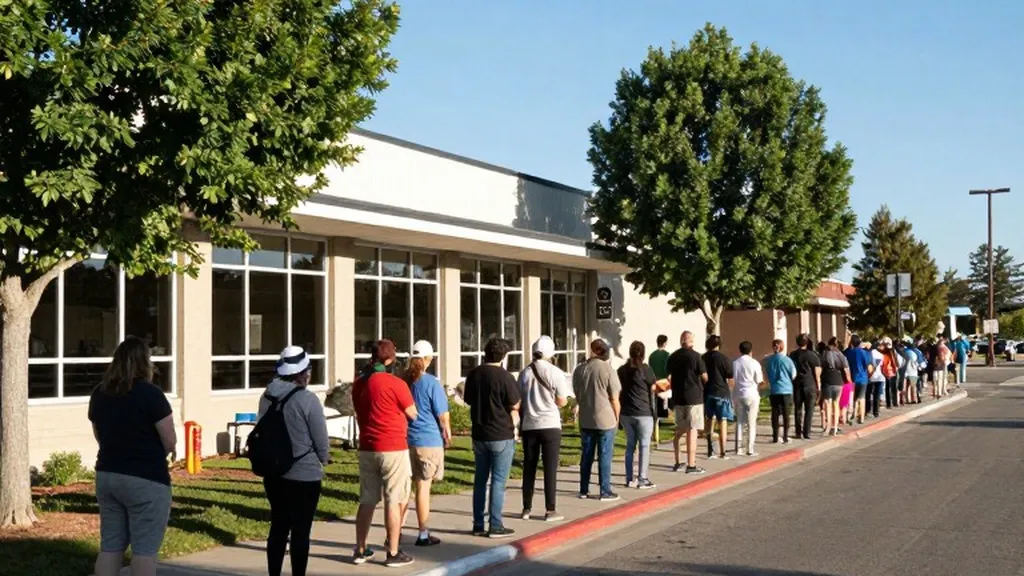
Polls in Ada, Canyon, and other counties across Idaho closed at 8 p.m. on Tuesday, November 3, 2026, marking the end of a general election that determined the composition of the state's congressional delegation. Voters in Boise, Meridian, Nampa, and Caldwell cast ballots for every U.S. House seat in the state, as well as for the governorship and the U.S. Senate. The election was a pivotal moment for the state, with residents deciding the direction of their local and federal representation for the next two years.
In the statewide races, incumbent Governor Brad Little, a Republican, faced challengers from the Democratic, Independent, Libertarian, and Unaffiliated parties. The U.S. Senate race featured incumbent Jim Risch, a Republican, competing against candidates from the Independent and Libertarian parties. The high turnout in the Treasure Valley region, which includes Boise and surrounding towns, reflected the strong interest in these high-profile contests. The state’s political landscape remained heavily influenced by the Republican Party, which has maintained a strong presence in Idaho’s statehouse and congressional delegations.
The U.S. House races in Idaho were closely watched as voters selected representatives for all of the state’s districts. The outcome of these races was significant not only for local policy but also for the balance of power in the federal government. Idaho’s delegation, traditionally leaning Republican, played a crucial role in the national tally. The results from the state contributed to a broader trend that saw the Republican Party maintain its majority in the House of Representatives, a position that will shape legislative priorities in the coming years.
Nationally, the midterm elections produced a decisive outcome for the U.S. House of Representatives. The Republican Party secured a comfortable majority, solidifying its control over the lower chamber of Congress. This result was part of a broader pattern of Republican gains that extended to state legislatures and governorships across the country. The national three-seat margin, a key metric in understanding the balance of power, favored the Republicans, ensuring they would have the numbers to push their legislative agenda forward without requiring bipartisan cooperation.
The implications of the national House results are far-reaching for policy areas such as taxation, healthcare, and infrastructure. With a solid majority, the Republican Party in the House is poised to advance bills that align with their platform. This control also means that the party will have significant influence over committee assignments and the selection of leadership, which will determine the direction of legislative efforts in the new Congress. The election results signal a clear mandate from voters who supported the Republican candidates in both state and federal races.
In Idaho, the election results were consistent with the national trend, as Republicans retained their seats in the U.S. House. The state’s voters, including those in the fast-growing suburbs of Boise, Meridian, and Nampa, demonstrated a preference for the Republican platform. This outcome ensures that Idaho’s representatives will continue to advocate for the state’s interests in the federal government. The stability of the party control in the state’s congressional delegation provides a sense of continuity for local issues that require federal attention, such as water rights and energy policy.
The governor’s race in Idaho also saw a Republican victory, with incumbent Brad Little winning re-election. His win, combined with the House results, means that the Republican Party will have unified control of the state’s executive and legislative branches. This alignment of power is expected to streamline the legislative process in the state, allowing for the passage of bills with less resistance. The governor’s agenda, which includes focus areas on economic development and education, is likely to gain momentum with the support of a Republican-led state legislature.
The U.S. Senate race in Idaho concluded with the re-election of Jim Risch, maintaining the state’s Republican representation in the upper chamber. His victory ensures that Idaho will have a consistent voice in the Senate, where the Republican Party also maintained a majority. The re-election of Risch is seen as a validation of his record in Congress, where he has been a prominent figure on foreign policy and domestic issues. His continued presence in the Senate will allow him to continue his work on key legislative priorities that affect Idaho and the nation.
The national picture of the 2026 midterm elections shows a Republican Party that has consolidated its power in both chambers of Congress. The three-seat margin in the House, which favors the Republicans, provides a buffer against potential defections or vacancies that could occur during the congressional session. This margin is a testament to the party’s ability to mobilize its base and attract swing voters in key districts. The results suggest that the Republican Party is well-positioned to implement its policy goals in the coming years, with a strong mandate from the American electorate.
For Idaho, the election results reflect a state that is firmly aligned with the Republican Party at both the state and federal levels. The voters in Boise and the Treasure Valley have shown a clear preference for Republican candidates, ensuring that the state’s political representation will remain stable in the near future. The election of a Republican governor and a solid Republican majority in the House and Senate means that Idaho will have a unified political front as it addresses the challenges of the coming years. The results of the 2026 midterm elections mark a new chapter for Idaho, one defined by continued Republican leadership and a clear direction for policy and governance.