Idaho House races reflect national Democratic surge in 2026 midterms
The national gain of at least 43 House seats by Democrats sets the stage for a new Congress, while Idaho voters decided the state's congressional delegation and other key offices on Tuesday.
By Justin Brooks ·

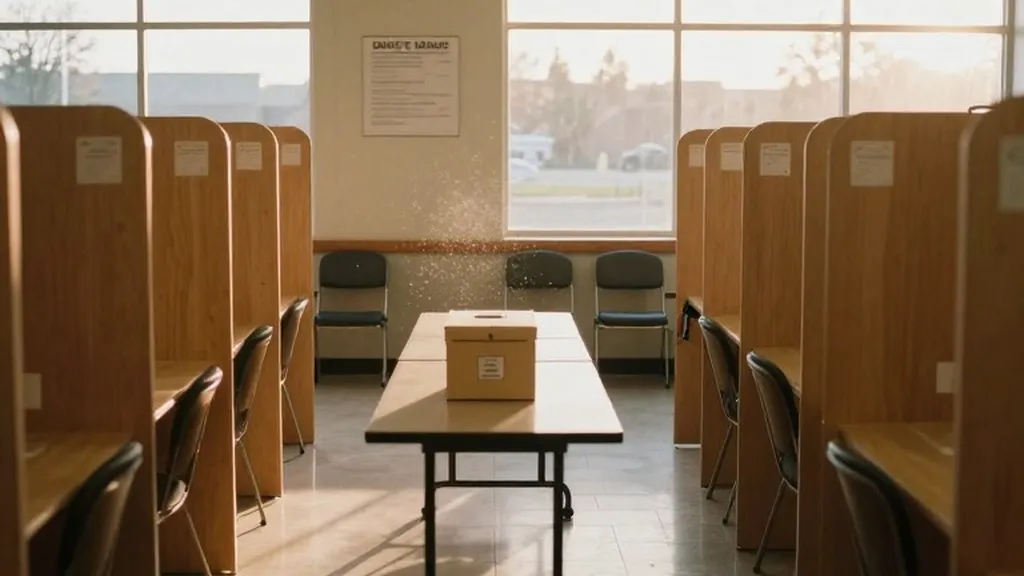
Residents of Ada County cast their ballots Tuesday, November 3, in the 2026 midterm elections. Polling locations across Boise, Meridian, Nampa, and Caldwell generally operated from 8 a.m. to 8 p.m., with some sites opening as early as 7 a.m. at the discretion of the county clerk. Idaho voters held every U.S. House seat in the state, as well as the U.S. Senate seat and the governor's office, on the ballot. The election also included state legislative races, state supreme court contests, school board elections, municipal government offices, and various ballot measures that varied by county.
In the U.S. Senate race, incumbent Republican Jim Risch ran for reelection. The ballot included candidates from the Independent, Libertarian, and Republican parties. In the governor's race, incumbent Brad Little, a Republican, sought another term. Candidates from the Democratic, Independent, Libertarian, Republican, and Unaffiliated parties appeared on the ballot. These state-level contests were part of a broader national cycle that resulted in significant shifts in power at the federal level.
National results indicate that Democrats secured majorities in both the U.S. House and the U.S. Senate. According to data compiled by Ballotpedia as of 4 p.m. ET on November 6, Democrats picked up at least 43 House seats. Of these gains, 42 seats were previously held by Republicans, and one was previously held by an independent. This net loss of 42 seats for Republicans is substantial, though it falls short of the 48 seats needed to qualify as a wave election by historical standards. However, uncalled races could still alter the final total.
In the Senate, Democrats gained seven seats, all of which were previously held by Republicans. This shift places Democrats in a position of strength, with a projected majority of 54 to 44. The net loss of at least seven Senate seats by Republicans places this election year in the top 20% of election years in terms of seat swings against a president's party. This threshold is often defined as a wave election, highlighting the magnitude of the change in the upper chamber.
In the House, Democrats are projected to hold at least a 250 to 157 majority. This outcome marks a significant reversal from the previous Congress, where Republicans held the majority. The shift in control will likely impact legislative priorities, committee assignments, and oversight functions. With Democrats now in control of both chambers, the balance of power in Washington has shifted decisively. This new configuration will determine the approach to federal legislation, appropriations, and investigations in the coming two years.
The election results also reflect broader trends in state government. Democrats won a plurality of state government trifectas and a majority of state legislative chambers. Additionally, Democrats secured a majority of governorships for the first time since before the 2010 elections. As of 4 p.m. ET on November 6, trifecta status had been decided in 44 of the 46 states. This widespread shift indicates that the national trend toward Democratic control is evident across various levels of government, not just in Washington.
For Boise and the surrounding areas, the outcome of the House races will determine the state's representation in the federal legislature. The national context of a Democratic surge provides a backdrop for these local contests. While specific candidate names for Idaho's House seats are not detailed in the provided facts, the overall trend suggests a competitive environment influenced by the broader national mood. Voters in Idaho participated in a cycle that resulted in a significant change in the composition of the U.S. Congress.
The timing of the election coincided with other national political developments. President Donald Trump addressed several issues during this period, including the FBI's investigation into Nvidia CEO Jensen Huang and the impeachment resolution for Defense Secretary Pete Hegseth. These events provided additional context for the midterm cycle, as voters considered the performance of the incumbent administration. The election results suggest a desire for change among voters, as indicated by the substantial seat gains by the opposition party.
Democrats in Congress are preparing to use their new majorities to advance their legislative agenda. This includes potential oversight of federal agencies and the use of appropriations power to influence policy. The shift in the House and Senate will likely lead to new committee leaders and a different approach to legislation. The new Congress will convene in January, with Democrats in control of both chambers. This change will impact the legislative process and the ability to pass bills, as well as the conduct of investigations and hearings.
The election results in Idaho are part of a national pattern of Democratic gains. The state's participation in the federal elections reflects the broader trends observed across the country. As the new Congress takes shape, the implications for federal policy and oversight will be significant. The election of a new majority in both chambers sets the stage for a new era in legislative activity. The results underscore the importance of midterm elections in shaping the direction of the federal government.
Voters in Boise, Meridian, Nampa, and Caldwell played their part in this national cycle. The election took place on Tuesday, November 3, 2026, with polls open for the majority of the day. The results, as reported by Ballotpedia, show a clear shift in power at the federal level. This shift will have lasting effects on the legislative landscape and the balance of power in Washington. The election serves as a reminder of the impact that local votes can have on national outcomes, as the collective results determine the makeup of the U.S. Congress.