St. Louis veteran returns to crossing guard post with service dog
A Goldendoodle assists James Poggi with daily tasks as he prepares for a full-time return to work, supported by a new grant covering partial training costs for ten other service members.
By Justin Brooks ·
Veterans in the Midwest are increasingly turning to canines to manage the physical and mental aftermath of military service. In St. Louis, James Poggi is using a Goldendoodle named Teddy to reclaim his daily routine.
Poggi served in the Marine Corps aviation sector. His service resulted in five back surgeries and a below-the-knee amputation. He attributed these injuries to multiple accidents, hard landings, physical therapy mishaps, and a car crash while active duty. He also developed spinal meningitis during his service.
"You go from being six foot three, 250 pounds and able to travel halfway across the world and do whatever they ask you to do, to being relying on wheelchairs, walkers, mobility devices, things like that, you become a vulnerable person that you never thought you'd be," Poggi said.
His wife, who acts as his caregiver, suggested he obtain a service dog to ease the emotional burden. Teddy now performs specific tasks for Poggi. The dog retrieves dropped keys, picks up a cell phone, and carries items. Poggi described the dog as a daily lifeline and a source of joy comparable to his children.
"His favorite thing is to retrieve, to help me carry things," Poggi said. "If I drop my keys or anything like that, I'll pick them up for me. He can retrieve my cell phone for me and things like that."
Teddy underwent training at Dog Training Elite St. Louis. The facility prepares dogs for real-world scenarios beyond basic obedience. Matt Willis, the owner, said the training environment simulates actual life experiences. He noted that the chemical changes in the body resulting from interaction with dogs provide an uplift that many veterans need.
Willis stated that veterans often face gaps in government care for physical and mental trauma. To address this, a private donor grant will cover 30% of training costs for ten veterans or active military members. The grant is designed to make service dog training more accessible for those in need.
"While you know our government and the system tries to do what they can, there's obviously some gaps in that care for our veterans," Willis said.
Poggi is preparing to return to his job as a school crossing guard in Mascoutah. He plans to work full-time next school year, accompanied by Teddy. The dog will have a designated spot at the corner.
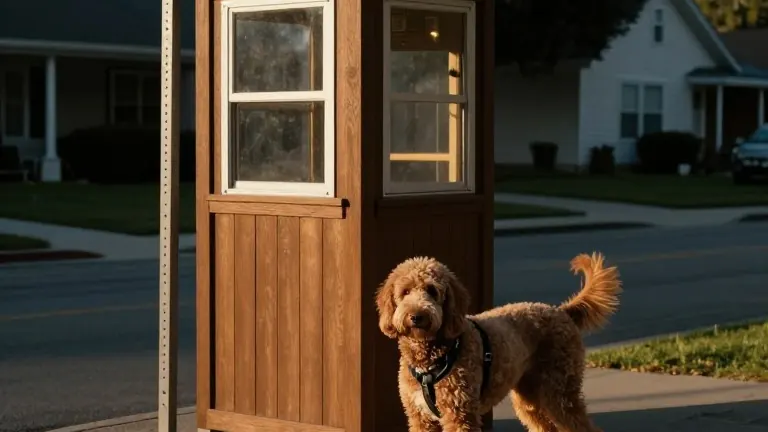
"Next school year, I'll be back full-time out on the corner every day, rain or shine. He's out there with me. He's got the got a little crossing guard hut and everything," Poggi said.
A 2024 survey of approximately 600 veterans found that about 40% did not have a PTSD service dog but desired one. A separate 2024 study associated service dogs with lower rates of anxiety and depression in veterans with PTSD. The Department of Veterans Affairs currently does not provide service dogs for mental health conditions and continues to study their potential benefits.
The VA's current stance leaves many veterans to seek private training or grants to secure the support they require.
Source: KVVU-TV