Lewiston Voters Face Syringe Exchange Limits
A proposed ballot measure would cap daily syringe distributions at 20 units, a change critics argue contradicts state data and public health guidelines.
By Justin Brooks ·
Lewiston residents will vote on Question 1 to impose strict limits on syringe service programs. The measure requires a one to one exchange for every new syringe issued and sets a daily cap of 20 units per client. This would replace the current state rules, which allow programs to provide up to 100 new syringes to clients who have no used ones to return.
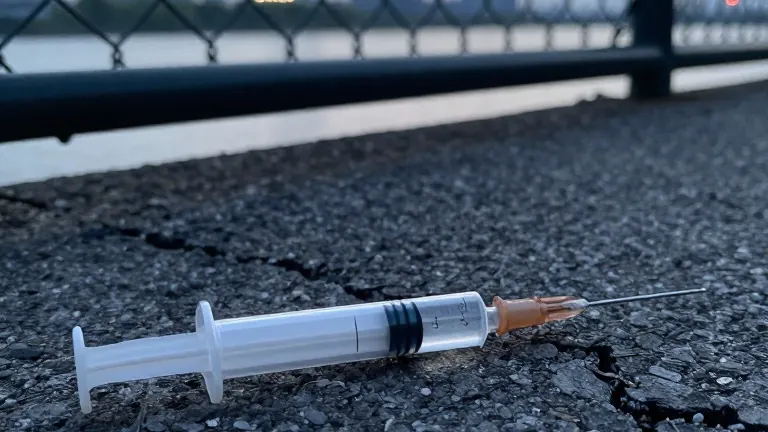
Eryn Soule, a former city councilor and state Senate candidate, initiated the effort to place the question on the ballot. She pointed to discarded syringes found along the Androscoggin River and near crumbling asphalt at a former industrial site. Soule stated that she has received numerous complaints regarding syringe waste in the city. She argued that the current distribution model addresses one issue while creating another. "Helping one group but destroying your community is not success," Soule said.
Safe and Healthy Maine, a coalition of medical professionals and advocates, opposes the measure. Spokesperson Cara Courchesne said the proposed restrictions do not align with how addiction functions. She noted that the U.S. Centers for Disease Control and Prevention and the World Health Organization recommend a needs based model without a set cap. Courchesne described Maine's current one to 100 policy as conservative compared to national standards.
Courchesne cited state data to support the coalition's position. She said research indicates that syringe service programs reduce needle waste rather than increase it. According to the most recent figures, Spurwink's program in Lewiston collected nearly 50,000 more syringes than it distributed over a one year period. She added that these programs serve as a pathway for clients to enter recovery treatment.
Opposition to these programs is not unique to Lewiston. In Sanford, the city council enacted a similar one to one exchange rule two years ago. Last year, Maine Access Points agreed to pause its local syringe program to test the impact. Anna McConnell, the organization's executive director, said the pause did not reduce litter. She reported that frustrated community members continue to find syringes in Sanford's public parks and trails during the summer and fall.
Sanford City Manager Steven Buck disagrees with McConnell's assessment. He stated that city workers have reduced their weekly collection volume from a full 5 gallon bucket to just a handful of syringes. Buck attributed the remaining waste largely to former homeless encampments. "It is day and night," Buck said. "It's irrefutable that our volumes are down so significantly."
Despite their disagreement on waste levels, both McConnell and Buck agree that referrals for support and treatment have declined. McConnell said more individuals are now sharing and reusing syringes, leading to serious infections. She said she hopes voters understand that reducing the program in Sanford did not produce the desired outcome.
Courchesne suggested alternative methods for managing syringe waste in Lewiston. She proposed installing more public sharp disposal containers and supporting community cleanup efforts. She also recommended using opioid settlement funds to adopt a syringe redemption program similar to a pilot project in Portland. Courchesne said the city can achieve safe disposal goals without dismantling programs that protect public health.