Justice Department sues to hold Alaska Senate results over name confusion
The Trump administration alleges the Peltola campaign recruited a rival with the same name as Republican incumbent Dan Sullivan, a tactic with deep roots in American politics.
By Samantha Reed ·
The Trump administration has filed a lawsuit to prevent the certification of a potential victory for Democrat Mary Peltola in the Alaska Senate race. The suit seeks to pause the process until investigators determine whether voters were confused by the presence of a second candidate named Dan Sullivan on the ballot. This legal move follows a New York Times report alleging that Peltola's campaign recruited the second Sullivan to split the Republican vote.
The use of candidates with identical names is a political strategy with a long history. In 1946, supporters of John F. Kennedy recruited a 27-year-old janitor named Joe Russo to run against a four-term Boston city councilman with the same name. More recently, in 2020, a Florida state Senate race saw Democrat Jose Javier Rodriguez lose by 32 votes to a Republican challenger after an independent candidate named Alex Rodriguez won 6,382 votes. Frank Artiles, a Republican former state senator involved in that Florida effort, was later convicted of illegal campaign contributions and sentenced to 60 days in jail.
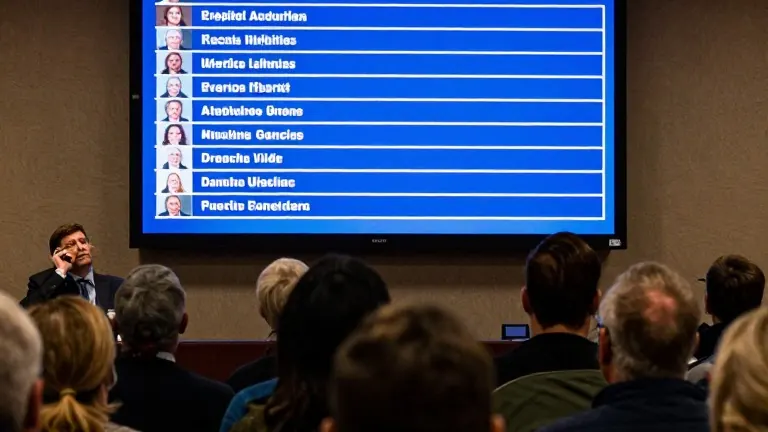
In the current Alaska contest, Republican Sen. Dan Sullivan faces three challengers. In addition to Peltola, a former House member, the ballot includes a retired school teacher named Daniel J. Sullivan Jr. and another candidate who has barely campaigned. Republicans had long suspected the second Sullivan was a Democratic plant. Peltola and the Democratic Senatorial Campaign Committee have both denied involvement in the recruitment scheme.
The Justice Department’s intervention marks a departure from historical norms, as the agency typically avoids overt investigative actions within 60 days of an election. In a statement released Wednesday, the department said it is following the facts and the law, not anyone’s political timetable. Critics, including Justin Levitt, a law professor at Loyola Marymount University, argue the timing suggests political motivation. Levitt noted that while the tactic may be distasteful, it is common and there is no disclosed behavior that violates federal law.
The dispute highlights vulnerabilities in Alaska’s ranked-choice voting system. Jason Torchinsky, a veteran campaign finance attorney, described the case as Exhibit A for how the system can be manipulated. Under these rules, anyone who pays a $100 filing fee can appear on a lengthy primary ballot. The top four finishers advance to November, where voters rank three choices. Sullivan’s campaign urges Alaskans to pick both Sullivans and not Peltola to prevent the Democrat from advancing. Republicans in other states are also using similar tactics, such as boosting independent candidates with names matching their Democratic opponents in Nevada and Ohio.
David Becker, executive director of the Center for Election Innovation and Research, expects a judge to soon reject the Justice Department’s lawsuit. He suggested that Congress should regulate these practices to prevent both parties from using them. The next step in the process is for a judge to rule on the administration's request to hold the certification of the election results.
Source: Bangor Daily News