DC Court Battles: Two Trump Projects Face Legal Challenges
Federal judges heard arguments Friday on a golf course closure and a new memorial arch, both planned for completion before the midterm elections.
By Aiko Nakamura ·
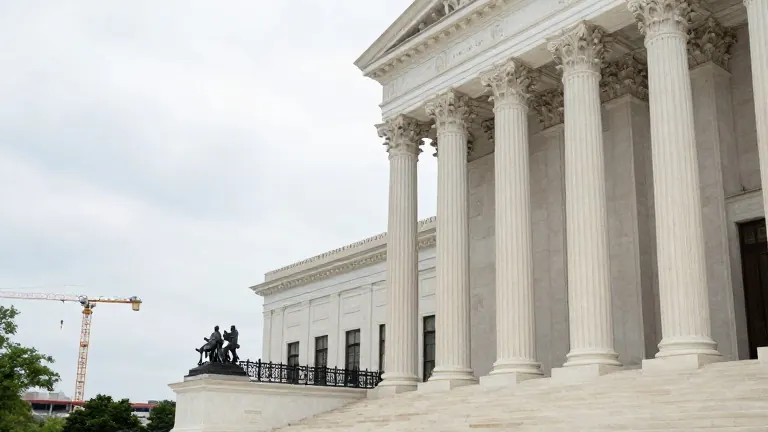
Two major infrastructure projects in Washington, D.C., faced legal scrutiny on Friday as federal judges reviewed plans announced by the Trump administration. The cases involve a historic golf course and a new 250-foot arch, both located within five kilometers of each other near the National Mall. These legal battles have intensified as the midterms approach, with construction timelines set to begin in November.
U.S. District Judge Ana Reyes presided over a hearing regarding the East Potomac Golf Links. The administration plans to close the course for 15 months starting November 15 to rebuild it as a world-class facility. The design, credited to Tom Fazio, was submitted to the National Capital Planning Commission on October 30. The Justice Department confirmed the plans in a filing on Wednesday night, following a series of Truth Social posts by President Trump that began on October 18.
Reyes questioned Associate Attorney General Stanley Woodward Jr. about the timeline and the public statements made by the president. During the hearing, Woodward initially included tree cutting in the closure plans before correcting himself to note the work had already occurred. Reyes responded by reading the code of conduct on presenting false information to the court. She indicated she would appoint a special master to investigate the administration's statements.
In a separate courtroom, Judge Tanya Chutkan heard arguments on a motion to halt construction of a memorial arch. The 250-foot structure would stand 100 feet taller than the Statue of Liberty. A group of veterans and an architectural historian filed suit, arguing that Congress must endorse the project before construction begins. The plaintiffs requested a preliminary injunction to prevent the administration from starting work as early as November 5.
The lawsuit argues that the public interest favors delaying the project until the court can make a final determination. The plaintiffs stated they want to block the defendants from making the arch a fait accompli. Legal experts note that these cases test the limits of presidential power in federal areas. David Super, a law professor at Georgetown University Law Center, said the administration is pursuing theories that may be legally unsound, aiming to do things that are indisputably illegal if the courts cannot stop them.
The two hearings revealed the scope of the administration's attempts to reshape the capital's landscape. The Justice Department's late filing confirmed the golf course plans were real, ending a period of uncertainty caused by conflicting official statements. The court will now decide whether to allow the projects to proceed or require further congressional approval.
Source: Bangor Daily News