Delaware Election: State officials detail voter protections
Attorney General Jennings, Governor Meyer, and Election Commissioner Albence outline specific legal safeguards and federal monitoring protocols for the November 3 general election.
By Aiko Nakamura ·
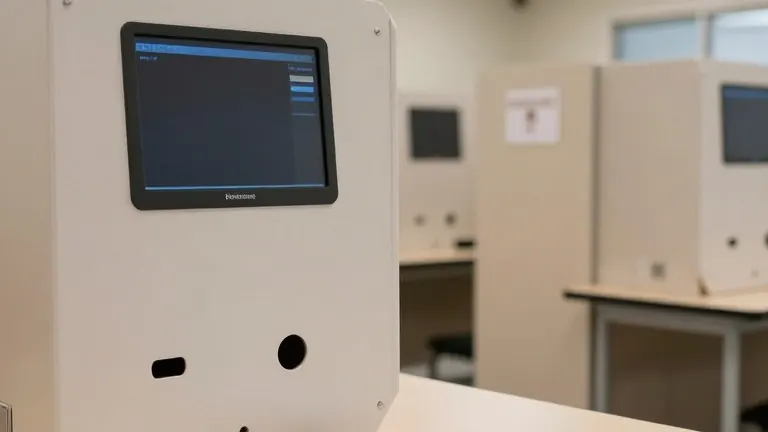
Polls close at 8 p.m. on November 3, serving as the final deadline for in-person voting in Delaware's general election. State officials issued a detailed briefing on the legal rights of voters and the operational measures in place to protect those rights.
Attorney General Kathy Jennings described the right to vote as load-bearing, stating that it holds up all other citizen rights. She emphasized that state agencies are working to ensure the process remains easy, safe, and secure. Governor Matt Meyer reinforced this stance, noting that voting allows the American people to choose leaders and hold them accountable. He pledged that Delaware would protect eligible voters and defend lawful results regardless of the winner.
State Election Commissioner Anthony Albence confirmed the Department of Elections' commitment to administering secure and impartial elections. He stated that the department works to ensure every eligible voter has the opportunity to cast a ballot. The officials provided a list of specific rights for the public. Registered voters are entitled to vote and cannot be coerced or intimidated by any person or corporation.
Voters in line when polls close at 8 p.m. remain eligible to vote. Individuals who make a mistake on their ballot can request a new one from a poll worker. If voting machines fail, voters may ask for a paper ballot. Those whose names are not in the poll book can cast a provisional ballot and receive written notification on how to verify if their vote was counted.
The state outlined specific protections for voters with disabilities and those needing assistance. Blind or physically disabled voters may bring up to two helpers. If a voter needs help in the booth, two elections officers from different parties must assist simultaneously without influencing the decision. Voters who moved or changed names recently can correct their registration on Election Day before voting. Campaign staff may contact voters by phone or in person, provided they are not within 50 feet of a polling location entrance.
The Department of Justice's Division of Civil Rights and Public Trust provided law enforcement with written guidance on potential offenses. These include voter intimidation, harassment, and criminal nuisance. The list also covers improper influence, breach of peace, and impersonating law enforcement. Fraudulent voting offenses include impersonating another voter, voting more than once, or voting out of district. Illegal electioneering involves advocating for candidates or distributing partisan materials within 50 feet of the entrance.
Federal election monitors from the U.S. Department of Justice will be present in Delaware on Election Day. These monitors operate under the Voting Rights Act of 1965 and have observed voting in prior elections under different administrations. Their role is to ensure federal rights are honored and to serve as fact witnesses if rights are compromised. They are federal employees who must comply with state laws, including rules that bar them from entering polling locations without an escort. Monitors are unarmed and cannot compel voters to speak with them, though they may request interviews outside polling places.
State authorities are coordinating through Governor Meyer's Election Security Task Force. This group includes the Departments of Elections, Safety and Homeland Security, and Technology, along with the National Guard and various DOJ divisions. The state has trained poll workers and drilled coordinated responses to potential disruptions. DOJ election attorneys will be on call for rapid legal counsel, while the Division of Civil Rights and Public Trust is ready to consult with law enforcement on intimidation cases. A statewide Elections Joint Information Center will staff communications from 6 a.m. on November 3 to 1 a.m. on November 4.
Voters with safety concerns should call 911. For other problems, the Department of Elections operates a voter hotline at (302) 739-4277. The DOJ advised voters to exercise patience with poll workers and potential delays in tallying national results.