Cousens: Secure Coops Beat Trapping for Chicken Protection
A Maine resident argues that layered fencing and habitat management reduce predator attacks more effectively than lethal traps.
By Justin Brooks ·
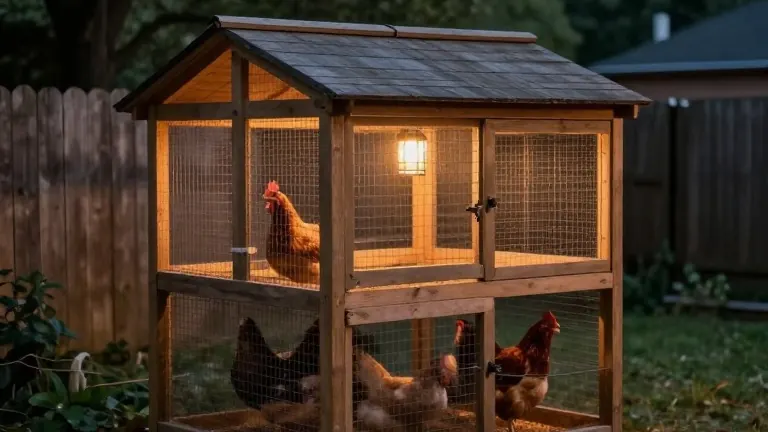
Arielle Cousens of Readfield, Maine, wrote a letter to The Forecaster on Oct. 19 to counter recent coverage about the rising interest in trapping predators. She argued that traps do not distinguish between wild animals and household pets, often causing injury and death to both groups. Cousens maintained that the article spread misinformation regarding how to manage predator populations that threaten backyard chickens and small livestock.
Cousens stated that when predators kill chickens, the cause is usually an insecure coop or run rather than the number of predators in the area. She noted that a neighborhood dog could inflict the same damage if the enclosure is weak. Instead of killing every fox or coyote, she said owners must fortify their structures. She described a defense strategy involving a central coop, wire or electrified netting for the chicken yard, and a perimeter fence to disrupt predator travel paths.
The resident recommended keeping the most vulnerable livestock in the center of the property, surrounded by larger animals that access the outer pastures. She advised providing trees or shrubs to offer protection from sky predators. Cousens said this approach requires understanding how predators think and using natural methods to keep them at bay without cruelty or killing.
Cousens reported keeping chickens for more than a decade in an area with regular sightings of foxes, coyotes, hawks, eagles, fishers, and weasels. During that time, she said she lost no livestock to predators and killed zero predators. She characterized hunting or trapping predators to solve a predator problem as a fool's errand. The letter concluded that responsible animal keeping is achievable and does not need to be expensive.
The letter was published in response to an article titled "Interest in trapping grows in Maine," which appeared in The Forecaster on Oct. 19. Cousens addressed the piece as a concern for both wild animals and pets that step into traps. She emphasized that layers of protection allow predators to reroute away from people's yards permanently.
Source: The Forecaster