$503,125 Federal Grant Aims to Study Rail Return to Boise
City leaders are using new funding to evaluate how to finance passenger trains, while regional planners advance a separate commuter line proposal.
By Aiko Nakamura ·
Boise officials received $503,125 in federal funding in June to begin a formal study on financing options for intracity passenger rail service. The grant will not guarantee that trains will return to the city, but it will allow planners to analyze potential costs and investment strategies for the historic Boise Depot. This development marks one of several recent steps in a conversation that has persisted for nearly three decades.
The last passenger train left the Boise Depot in 1997 when Amtrak discontinued the Pioneer route. That service connected Seattle to Salt Lake City, with stops in Portland and Boise. Before 1997, the route had been extended to reach Denver and Chicago. Since then, the tracks have continued to carry freight traffic, but the idea of restoring passenger service has remained a topic of local interest.
Regional transportation planners are simultaneously working on a separate proposal for a commuter rail line. The Community Planning Association of Southwest Idaho, known as COMPASS, approved a preliminary design in August. This design favors regional rail along the Boise Cut-off, which would connect Boise with Meridian, Nampa, and Caldwell. Austin Miller, the planning team lead at COMPASS, noted that this line could offer students and residents an affordable alternative to driving. He said it would reduce the need to worry about car maintenance, gas prices, and parking permits.
Boise State University students may see direct benefits from such a service. Brooklyn Lewis, a junior studying kinesiology from Salem, Oregon, said the drive home takes around seven hours. Lewis described having a train option as a significant change of pace, especially for students without access to a car. She noted that traveling between Boise and Salem by train would require a connection in Portland, rather than a direct route.
Long-distance travel options are also under review through a separate federal effort. The Consolidated Appropriations Act of 2026, signed into law in February, supports an Amtrak feasibility study. This study examines temporary passenger train service during the 2034 Winter Olympics in Salt Lake City. Two routes are being considered: one from Seattle to Denver with a stop in Boise, and another from Salt Lake City to Los Angeles via Las Vegas. Amtrak is expected to deliver this feasibility study to Congress in early 2027.
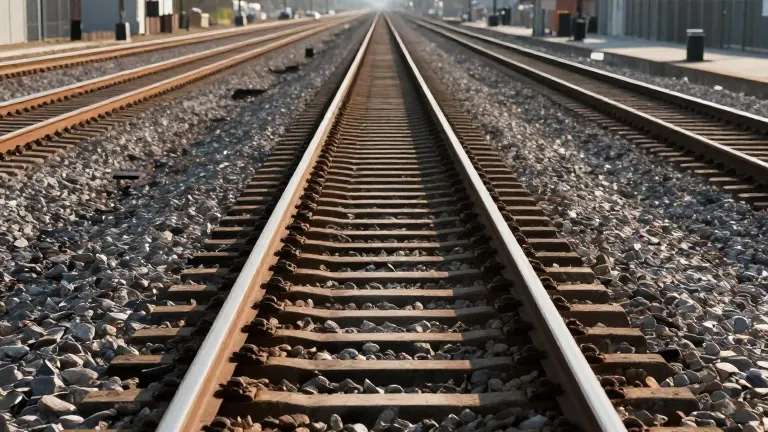
Elaine Clegg, CEO of Valley Regional Transit and a member of Amtrak’s board of directors, said the Boise Cut-off could support these proposals. The 25-mile corridor spans from Nampa to East Boise. Clegg stated that while some sections need upgrades, the basic infrastructure remains in place. She noted that some ballast will likely need rebuilding and some ties will need replacement, but she called the work a manageable lift rather than a massive undertaking.
Portions of the Boise Cut-off are currently used by freight trains, while other sections have been unused for years. The current studies aim to determine the specific requirements for restoring passenger service. For now, the tracks remain in place, and the financial and engineering analyses will determine the next steps for both the local commuter line and potential long-distance Amtrak service.
Source: The Arbiter (Boise State) · original report published