Over 53 million Americans cast ballots two days before election
University of Florida data shows early voting surpassing 2022 levels, with Democrats leading national polls despite Republican President Donald Trump's efforts to restrict mail-in ballots.
By Samantha Reed ·
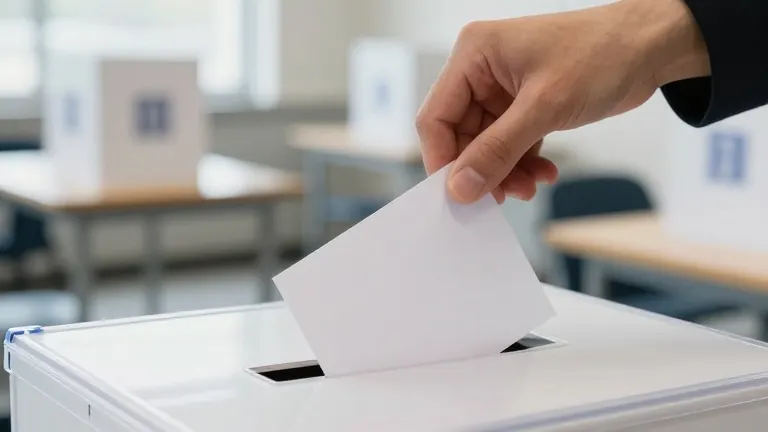
The 2026 midterm election cycle has entered its final stretch with record early participation. More than 53 million Americans had already cast their ballots as of Sunday morning, according to an analysis by the University of Florida. This figure includes approximately 29 million in-person votes and 23 million mail-in ballots submitted before the Tuesday deadline.
The surge in early voting exceeds the 46 million ballots cast during the 2022 midterms. The University of Florida data indicates that Democrats are leading in national polling, with 51.5 percent support compared to 43.1 percent for Republicans. This partisan divide is reflected in turnout, where over 11 million registered Democrats have voted early, outpacing the roughly 8 million registered Republicans who have done so.
State-level data reveals significant variation in voting behavior. Texas, a key battleground state, has seen more than 7 million early votes, a figure that is more than 1.5 million higher than at the same point in 2022. In South Carolina, early voting has jumped 83 percent compared to the previous cycle, despite the state having been won by Trump by nearly 18 percentage points in the 2024 presidential election. The state currently has open races for governor and US Senate.
Other states also report substantial increases in early turnout. Kansas has seen a 34 percent rise in early votes, adding roughly 83,000 ballots to the count since the 2022 midterms. This contest features Republican Senator Roger Marshall against Democratic Methodist minister Adam Hamilton. Maine, where Republican Senator Susan Collins faces Democratic former state Senate President Troy Jackson, reports a 44 percent increase in early voting. Michigan has recorded approximately 409,000 more early votes than in 2022, a 32 percent increase.
Political analysts suggest that voter anxiety and logistical convenience are driving this early surge. The University of Maryland’s Center for Democracy and Civic Engagement noted that many voters seek to avoid potential Election Day disruptions or wish to complete the civic duty quickly. Some participants described the process as a way to "cross it off their list" as soon as possible. Others cited social media and community events, such as "Parties at the Polls," as factors that made voting more accessible and visible.
Democratic strategist Celinda Lake observed that many voters are motivated by a desire for change. She noted that some are taking a calculated risk, stating, "You got a lot of voters who say, 'I'm going to do a Hail Mary for change, but I hope you do something.'" Young voters also pointed to media coverage as a catalyst for their engagement, with one stating that social media has "put voting in the limelight."
President Donald Trump has continued to challenge the security of mail-in voting, a system he has used personally multiple times. In March, he signed an executive order directing the US Postal Service to control mail-in voting by using new envelopes with special barcodes to verify voter eligibility. This move would have required states to adopt a uniform envelope style ahead of the election. Democrats and activists contested the order in federal courts, leading to a series of conflicting rulings between May and August.
The legal dispute concluded recently when the Supreme Court rejected Trump’s bid to enforce the mail-in voting restrictions before the current elections. The court’s decision allows states to maintain their existing procedures for the midterms. As of Sunday, the two days remaining before Election Day will determine the final count for the 210 million registered voters in the country.
Source: Al Jazeera