Exit polls show record Arab bloc as Israeli turnout tops 77 percent
Palestinian citizens turned out at roughly 80 percent, shattering a 1999 record and reshaping the balance of power in the Knesset.
By Justin Brooks ·
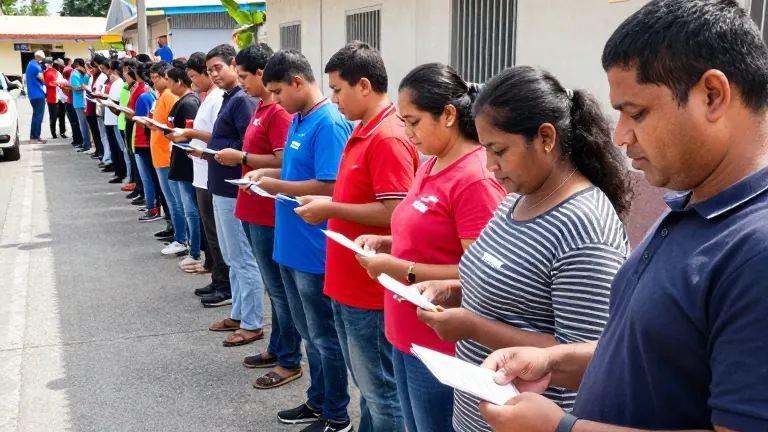
Gadi Eisenkot’s Yashar party and Benjamin Netanyahu’s Likud bloc are tied at 51 seats each in the 120-member Knesset, according to exit polls released Tuesday. The stalemate leaves the decision of who forms the next government to the two largest Arab-led parties, the Joint List and Ra'am.
Turnout among Palestinian citizens of Israel reached approximately 80 percent, a level that surpasses the previous record set in 1999. Channel 12 reported this figure based on early indications from polling stations. The Central Elections Committee stated that overall participation across the country hit 77.7 percent, the highest level recorded since 1999.
Mansour Abbas, the leader of Ra'am, said his party aims for the anti-Netanyahu bloc to reach the 61 seats required to form a government. Abbas noted that both major blocs approached his party for support before and after the vote. He told Channel 12 that the current numbers suggest no government can form without his party’s involvement.
Netanyahu and his far-right coalition made last-minute efforts to mobilize voters by emphasizing the high turnout in Arab communities. Witnesses reported cars with Likud flags driving through Jerusalem while playing the Islamic call to prayer. The campaign urged Jewish voters to go to the polls because "Arabs are voting." Netanyahu shared images of long lines at polling stations in Arab neighborhoods on social media.
Arab politicians criticized the Likud strategy as inflammatory and racist. Alon Pinkas, a former Israeli ambassador, argued that Eisenkot’s bloc faces a difficult path to power because it promised during the campaign not to enter coalitions with Arab parties. Pinkas stated that Arab-led lists would make demands that Jewish-led coalitions might resist, making the arithmetic of government formation complex.
Palestinian citizens constitute about 21 percent of Israel’s 10 million residents. Historically, they have voted at lower rates than Jewish Israelis. The Knesset has passed more than 100 laws that affect these citizens, including measures related to state funding and systemic discrimination. Nour Odeh of Al Jazeera described the election as an existential moment for Palestinian-Israelis, noting that the high turnout included voters who typically boycott the process.
Ra'am currently holds five seats in the Knesset. The party was part of the governing coalition from 2021 to 2022. The Joint List, the other major Arab-led party, is also projected to gain seats, contributing to the bloc’s total of 18 seats. This total is the highest number of seats ever won by Arab-led parties in the Knesset.
Source: Al Jazeera
More Politics · World news · Report a business · Got a Story?