Cuban and US Diplomats Clash Over Embargo Vote
The United Nations General Assembly prepares to vote on a resolution condemning the US trade blockade, following a heated exchange between Mike Waltz and Bruno Rodríguez.
By Aiko Nakamura ·
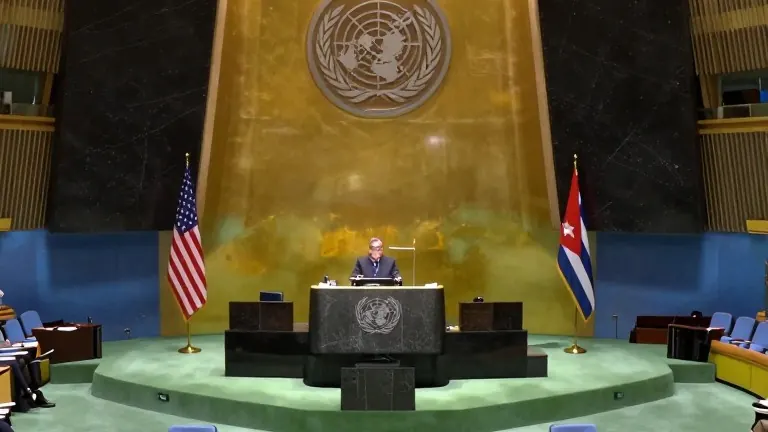
The United Nations General Assembly is set to vote Wednesday on a resolution that condemns the United States economic embargo on Cuba.
The measure has appeared before the 193-member body for 34 consecutive years and typically passes with overwhelming support. Last year, 165 members voted in favor, seven voted against, and 12 abstained. Analysts expect a similar margin this year, though the Trump administration is working to increase opposition among Western allies.
Tensions flared on the Assembly floor on Tuesday. US Ambassador Mike Waltz was criticizing the Cuban government when Bruno Rodríguez, the Cuban foreign minister, moved to the podium. Rodríguez called Waltz a liar and requested a point of order. As security staff moved to intervene, Waltz told the Cuban official to back away from the podium. "He's not going to intimidate me in the United States of America," Waltz said. He added, "You understand who you're dealing with? This is America. Back up."
Rodríguez responded on the social media platform X, noting that the exchange took place at the UN and not a White House meeting. He described the US effort as a desperate attempt to justify economic aggression and a criminal energy blockade.
This confrontation follows a similar incident a week earlier involving Waltz and Cuban diplomat Ernesto Soberón Guzmán. That dispute occurred outside a US-hosted panel featuring Cuban dissidents and former prisoners. The recent exchanges represent a departure from the standard diplomatic decorum observed in the General Assembly.
The vote comes as Cuba faces severe financial strain. President Donald Trump recently suggested that American warships might stop in Cuba on their return from the Iran war. In late January, the administration announced tariffs on nations that supply oil to Cuba. That policy has effectively cut off fuel to the island, leading to widespread blackouts that disrupt cooking, water supply, internet, and telephone service.
The embargo was first imposed in 1960 after Fidel Castro's revolution overthrew Fulgencio Batista and nationalized property owned by US citizens. The resolutions are not legally binding, but they serve as a measure of global opinion on the trade restrictions.
Source: ABC News
More World · National news · Report a business · Got a Story?