Breaking: AI Reckoning: Tech Stocks Plunge as Election Results Shake Confidence
Investors react to Democratic midterm wins and growing doubts about the high costs and returns of the artificial intelligence buildout.
By Aiko Nakamura ·
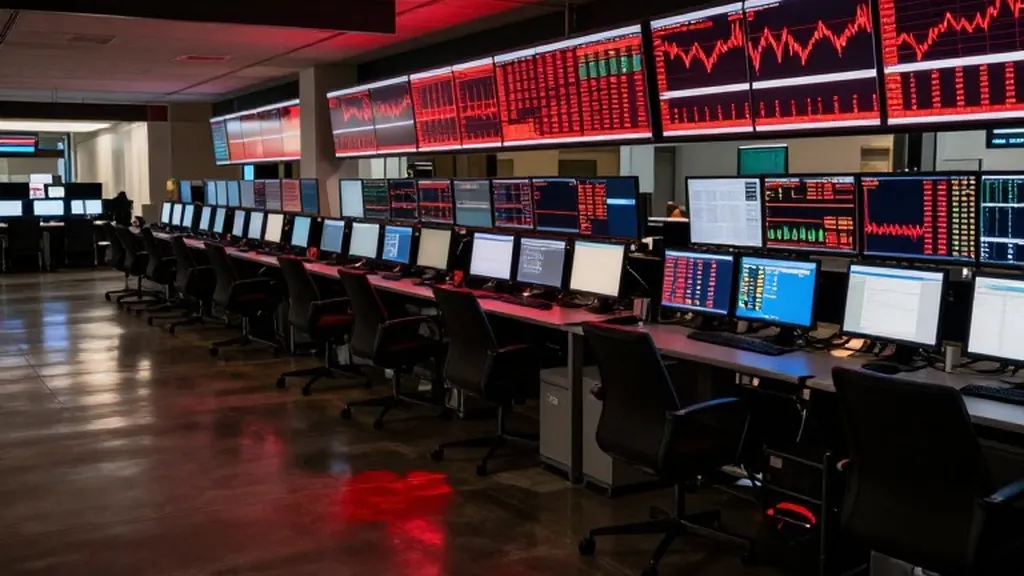
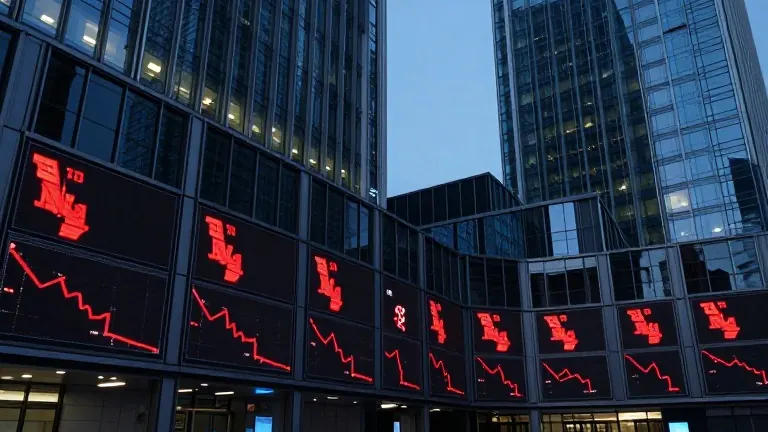
The stock market suffered a severe sell-off on Thursday, November 5, 2026, marking a sharp reversal in the recent optimism surrounding artificial intelligence. The Dow Jones Industrial Average fell more than 1,800 points, a drop of 3.4 percent, to close at 51,868. This decline erased the gains made on Wednesday, which had seen the Dow post its biggest daily gain of the year. The S&P 500 fell 4.3 percent, its worst day since April 2025, while the Nasdaq Composite dropped 5.5 percent, its steepest decline in 18 months.
For local readers and small investors, a day like this often feels abstract until it touches personal finances. However, these index drops directly impact retirement accounts, 401(k)s, and individual stock portfolios. When major technology companies lose value, the funds that hold shares in those companies also decrease in worth. This does not mean money is gone forever, but it signifies a period of volatility where the value of savings can fluctuate significantly from one day to the next. It serves as a reminder that market highs are not permanent and that periods of correction, where prices fall sharply, are a normal part of the economic cycle.
The primary catalyst for the crash was the outcome of Tuesday’s midterm elections. Democrats secured control of both the House and the Senate, a result that has shifted the political landscape regarding technology infrastructure. During the campaign, Democratic candidates in various states campaigned on slowing the spread of data centers and artificial intelligence. In Texas, Democrat Gina Hinojosa won the race for governor after campaigning on an immediate moratorium on new data center construction. Investors are now weighing whether these state-level restrictions could slow the construction of the facilities that power the AI industry.
This political shift has triggered a broader reckoning regarding the AI bubble. For months, there were worries that the massive sums being poured into artificial intelligence might not yield the expected returns. Susannah Streeter, chief investment strategist at Wealth Club, noted that fresh panic over the AI trade hit Wall Street hard. She explained that fears that the vast sums poured into AI infrastructure may not deliver the returns investors have been banking on are now colliding with the prospect of a sharp slowdown in data centre construction. This sentiment suggests that the market is moving from the promise of AI to the price of AI.
The tech industry itself appears surprised by the backlash from voters and the market. Greg Brockman, president and co-founder of OpenAI, spoke at the WSJ Tech conference in Napa, California, on Wednesday evening. He stated that everyone had been surprised by the reaction to data centers and that more work was needed to bring communities on board. Brockman said, "A lot of our shift over the course of this year has really been to realise that from San Francisco trying to build infrastructure in Texas, Georgia, and other places, you can't just tweet and say: 'This is going to be good.' You need to be in those communities." This admission highlights a gap between the speed of technological deployment and public acceptance.
Dina Powell McCormick, president of Meta, addressed the same conference, suggesting that the industry needs to put more effort into making the case for AI. She told the audience, "I think we need to double and triple down on telling the story." Her comments indicate that major players in the sector recognize the need for better communication to maintain public and investor confidence. The surprise expressed by these leaders underscores that the current market turbulence is not just a financial event but a social and political one.
Chip stocks led the rout, with Nvidia falling 9.2 percent and losing more than $400 billion in market value. The Philadelphia Semiconductor Index fell more than 12 percent, a drop that has left the index almost 40 percent below its peak in June. The selling spread through every sector of the S&P 500 and gathered pace through the day. The Cboe Volatility Index, often referred to as Wall Street's fear gauge, jumped to above 28, its highest reading since late March. This spike in volatility indicates that traders are aggressively hedging against further declines, reflecting deep uncertainty about the future trajectory of the AI trade.
Analysts are divided on the immediate outlook. Dan Ives, a tech analyst, stated that there is no way to sugarcoat the fact that Democrats taking control, especially over the Senate, will create major hurdles for AI and tech legislation. He described the midterm results as a clear sign that the pace of data center build-out will start to slow. Conversely, Gene Goldman, chief investment officer at Cetera Financial Group, suggested the sell-off had become exaggerated. He predicted a recovery, noting that corrections in a bull market are typically short lived and that he thinks there will be a bounce back soon.
Historical data offers mixed signals for investors. Frank Cappelleri, founder of CappThesis, pointed out that the Nasdaq was higher 12 months after the election in all but one of 13 midterm cycles since 1974. However, he added that the path can be a volatile one. A review of Nasdaq corrections over the last decade showed that while sell-offs are often followed by rough trading, the index typically returns to rally mode within six months. The average gain over six months following a correction bottom has been 17.03 percent, though the 2022 correction was a notable exception where losses continued to deepen.
More Business · Unethical Practices · Report a business · Got a Story?