Arab Parties Hold Key to Israeli Government
After an inconclusive election, Palestinian citizens of Israel cast a decisive vote that challenges Prime Minister Benjamin Netanyahu's hold on power.
By Aiko Nakamura ·
In the weeks following October 7, 2023, many Palestinian citizens of Israel abstained from voting, citing a lack of tangible political gains. That trend reversed last month, as record turnout by Arab voters helped remove Prime Minister Benjamin Netanyahu's right-wing coalition from its parliamentary majority.
The election resulted in a deadlock. Neither Netanyahu's bloc nor the center-right opposition led by Gadi Eisenkot secured the 61 seats required to form a government. Arab-led parties captured 19 of the 120 seats in the Knesset, a share that gives them decisive leverage in the upcoming coalition negotiations.
Jamal Zahalka, chairman of the High Follow-Up Committee, described the outcome as a historical achievement. He stated that the community successfully blocked the continuation of Netanyahu's government and found its strength in the ballot box. The Central Elections Committee reported that Arab parties saw a 64 percent increase in votes compared to the previous election.
The surge in support has intensified political friction. Netanyahu labeled the high Arab turnout an emergency on election day. Itamar Ben Gvir, the national security minister, urged voters to protect the country's Jewish character. The Likud party alleged that Arab parties stole the election through bribery and forgery, though police and election officials found no widespread fraud to support those claims.
Negotiations will now focus on which bloc can assemble a majority. Eisenkot, a former military chief of staff, needs the support of Arab parties to reach the required seat count. However, his party faces internal resistance to such an alliance. The Joint List, which won 11 of the 19 Arab seats, has said it may support a government from the outside but will not formally join one while the war in Gaza continues.
President Isaac Herzog is consulting with party leaders to determine who receives a mandate to form a coalition. He is expected to announce this decision next week. The chosen candidate has 28 days to assemble a government, with the option of a two-week extension. If that fails, a second candidate gets 28 days without an extension, after which new elections would be held.
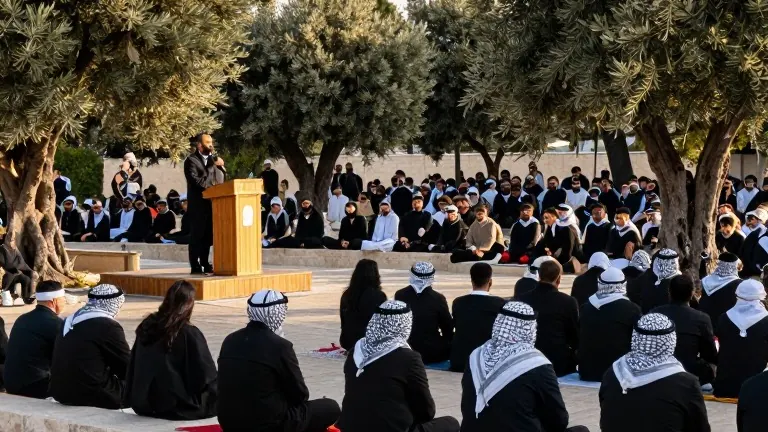
In Kufr Qasim, a Palestinian-majority town, residents gathered to commemorate the 1956 killings by border police. Speakers noted that 70 years later, the struggle for rights continues. Intisar Sarsur, 65, said her family participated fully in the election to seek basic human rights, noting that discrimination against their communities has risen since 2023. Mansour Shaaban, 33, who voted for the first time, said the election proved that Palestinian citizens have found their voice.