UC Geosciences Master's Student Leads Public Science Outreach at Farmers Market
AJ Kmetz, who returned to the University of Cincinnati for a second degree, directs the Science Harvest program, bringing buoyancy lessons and ecological research to the Northside Farmers Market.
By Justin Brooks ·
AJ Kmetz, a master's student in geosciences at the University of Cincinnati, leads a monthly public outreach program that brings scientific demonstrations to the Northside Farmers Market. The initiative, known as Science Harvest, is part of the Center for Public Engagement with Science, or PEWS, a unit within the College of Arts and Sciences dedicated to strengthening the connection between research and the public.
Kmetz, 29, returned to the university in 2025 to complete a second bachelor's degree in geosciences after earning a journalism degree a decade earlier. He is now pursuing a master's degree with a thesis focused on stable isotope ecology. His research examines minute chemical variations in carbon, nitrogen, and hydrogen atoms to track the dietary changes and migration patterns of birds. Specifically, he is studying how wildfires in Canada have altered bird nesting areas and the subsequent ecological effects.
Kmetz was drawn to PEWS because of the center's specific curriculum for engaging with non-scientific audiences. The center offers workshops, courses, internships, and fellowships for university students. Through this affiliation, Kmetz began leading Science Harvest, a program designed to make science accessible to a wide age range of community members, particularly children.
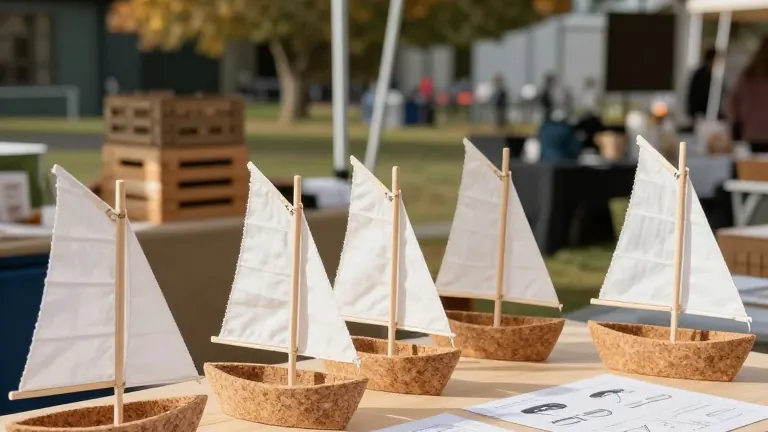
In October, Kmetz facilitated a session at the farmers market where participants built cork boats using foam and toothpick sails. The activity was designed to teach concepts of buoyancy and ship mechanics. Kmetz noted that creating projects appealing to diverse age groups has been a learning process for him. He observed that the program provided insight into how younger generations interact with scientific concepts.
Kmetz stated that such outreach is vital because a child's exposure to science often depends on their specific school environment. He argued that seeing science practiced outside the classroom reinforces its importance as a potential career path. The program also allows Kmetz to practice public speaking and build relationships with community members. He credited both PEWS and his geosciences program for making these opportunities possible.
Angela Potochnik, the director of PEWS, expressed surprise at the center's impact on Kmetz's sense of belonging and professional success. She described the work as ambitious, noting that the goal is not merely to promote science but to show how public influence can shape research to better serve communities. Potochnik said, "It's tremendously exciting and it comes as a surprise, I didn’t know we could make that much of an impact."
The next Science Harvest event is scheduled for November 18, from 4 to 7 p.m. Kmetz, who described himself as a "museum kid" with a lifelong interest in dinosaurs, views his work as a way to ask complex questions about both living and extinct organisms. He said, "There's a whole world out there of science that you can participate in."