Missouri Democrats flip 16 House seats to break GOP supermajority
Voters ended 14 years of Republican two-thirds control in both state chambers, shifting the balance of power in Jefferson City for the upcoming session.
By Aiko Nakamura ·
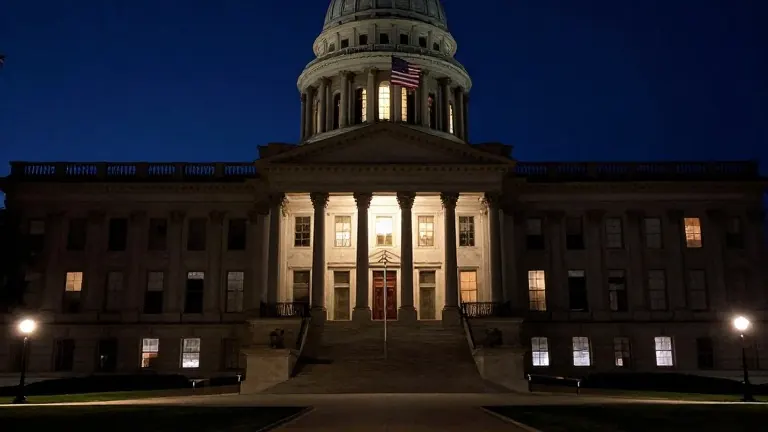
Missouri Democrats took control of the legislative process on Tuesday by winning enough seats to dismantle the Republican supermajority in both state chambers. The party captured 16 House seats and two Senate seats, ending a 14-year streak of dominant Republican power. Republicans still hold the majority in the House with 95 seats compared to 68 for Democrats, and in the Senate with 22 seats compared to 12 for Democrats. However, the new numbers prevent either party from reaching the two-thirds threshold required for a supermajority.
The shift in power removes a structural advantage that has allowed Republicans to push legislation with fewer obstacles since 2012. With the supermajority gone, Democrats now possess what they describe as leverage to influence the legislative agenda. Outgoing Minority Caucus Chair Emily Weber of Kansas City said the party finally played the game effectively. She noted that Democrats raised $6.1 million, fielded 155 candidates, and knocked on nearly half a million doors to secure these victories.
Weber stated that the wins were not driven by a single national trend but by a targeted local effort. She pointed to strategic investments in areas described as pink or purple, where voters are often undecided. The party focused on ground-level engagement, including town halls and door-knocking campaigns, to connect with constituents who expressed frustration with the state government. Weber said voters were tired of Jefferson City focusing on issues that did not reflect their daily concerns.
The Democratic victories were concentrated in several key regions, including St. Louis County, St. Charles County, the Springfield area, Cole County, and Cass County. Weber said these areas had previously been within reach of flipping, but this year’s operation was different in scale and execution. She rejected the idea that this was a blue wave, instead citing a methodical approach of recruiting candidates and investing resources in specific districts. The party’s strategy relied on consistent communication with voters rather than broad national messaging.
As the new legislative session approaches, Democrats say they will focus on affordability, health care, and utility rates. Weber identified these as the primary concerns for Missourians, noting that high gas prices and cost of living issues affect daily life. She expressed hope that the loss of the supermajority will force Republicans to engage on these practical matters rather than relying on controversial topics for sound bites. The party aims to use its new position to prioritize legislation that addresses these economic pressures.
The change in the chamber dynamics means that bipartisan cooperation or Democratic veto power will be necessary to pass major bills. Republicans, who have governed with a supermajority for over a decade, will now need to negotiate or adjust their legislative strategy. Democrats believe this shift allows them to better represent the concerns of voters who feel unheard. The new balance of power will be tested as lawmakers return to Jefferson City for the next session.