Death cap mushrooms found in Boise and Garden City greenbelts
Experts urge residents to identify wild fungi carefully after the toxic species spread to local oak trees.
By Samantha Reed ·
Residents of Boise and Garden City should be cautious while walking the greenbelt paths this fall.
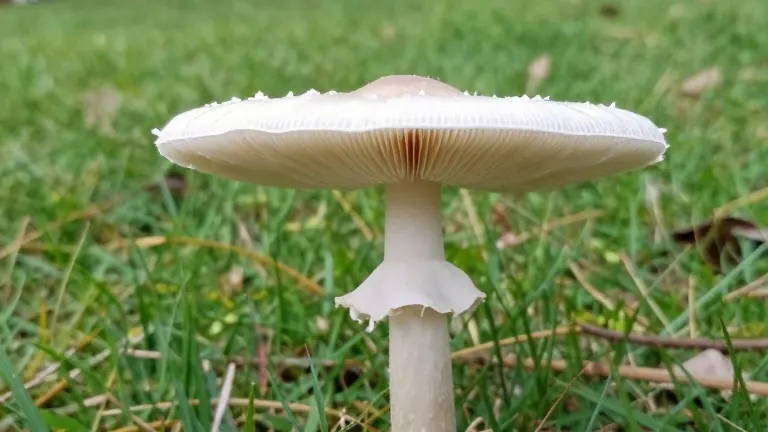
The toxic death cap mushroom has been confirmed in both areas. Susan Stacy of the Southern Idaho Mushroom Club first spotted the species in northern Boise in 2022. The fungus has since expanded its range to the greenbelt corridors in both cities.
Michael Myhre, president of the club, verified the identification using DNA barcoding. Stacy provided the sample, and the genetic analysis matched the Amanita phalloides species perfectly. The mushroom contains amatoxins that cooking does not destroy.
Jacob Venable, a mycology professor, explained the deceptive nature of the toxin. Patients may feel better for two or three days after ingestion. However, that period of relief often precedes symptoms of internal liver failure. Severe gastrointestinal distress typically occurs within four to six hours of eating the fungus.
Dr. Ron Kirschner, medical director of the Nebraska Regional Poison Center, advised calling poison control immediately upon noticing symptoms like vomiting or gut pain. Idaho does not have its own regional poison center due to its population size. The Nebraska center handles calls from the Gem State. Treatment may include a stomach pump or activated charcoal to draw out the poison. In severe cases, patients may require intensive care or a liver transplant.
The death cap is linked to roughly 90% of mushroom-related deaths globally. The British Columbia Medical Journal identifies it as the most toxic mushroom. Myhre noted that the fungus is difficult to eliminate once established. It lives in the roots of trees, many of which were originally from Europe or British Columbia. These trees were later relocated to Boise, California, and Oregon.
The mushrooms often grow near oaks and other hardwoods. Venable pointed out visual differences between the death cap and the edible paddy straw mushroom. The death cap features white gills and grows from a white cup. The paddy straw mushroom has pinkish gills that turn brown as it ages. Many deaths in the United States occur in California among Asian immigrant communities who may confuse the two species.
Picking the visible mushrooms does not remove the underground colony. Venable explained that spores travel on the wind and spread through the soil. Myhre, Venable, and Kirschner recommend against eating wild mushrooms unless they are positively identified. Kirschner suggested buying mushrooms from grocery stores to avoid the risk of misidentification.