Nvidia Shares Fall 4% as Board Investigates CEO's Ties to China
Jensen Huang admitted infidelity in a staff memo while the company probes a suspected intelligence operation involving a former partner.
By Justin Brooks ·

The world's second most valuable corporation, Nvidia, is undergoing an internal review of its leadership following allegations that its chief executive was targeted by Chinese intelligence. The company’s board launched an independent investigation on Sunday after media reports linked Jensen Huang to a former executive at a Singapore-based data center firm.
According to a report from The New York Times, United States intelligence officials believed Alice Huang, a Chinese citizen, had been recruited by Beijing to gather information about the Nvidia chief. The investigation will determine if sensitive company data or national security details were compromised. Nvidia stated in a statement that it has no current reason to believe its confidential information was breached, but it is cooperating with external legal counsel.
Huang, 63, is a dual national of Taiwan and the United States. He admitted to his staff in a memo on Sunday that he was unfaithful to his wife. "I was unfaithful to my wife. My actions hurt her and our children. There is no excuse for what I did. I am deeply sorry," he wrote. The company's board said it prioritizes US national and economic security and that Huang fully supports the review.
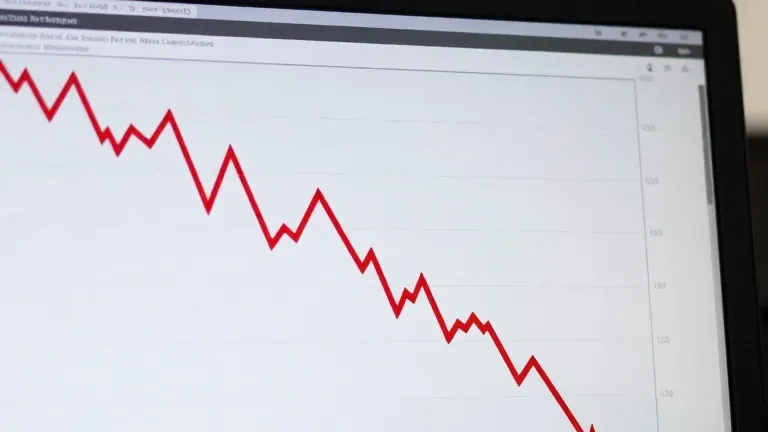
The stock market reacted quickly to the news. Nvidia shares dropped by more than 4 percent in overnight trading into Monday. The company's market capitalization stands at $4.5 trillion, a figure that exceeds the gross domestic product of Japan. Investors are watching closely to see if this personal scandal becomes a larger corporate crisis.
Alice Huang, also known as Huang Le, previously served as a senior executive at Megaspeed International. The firm provides computing infrastructure for AI systems and purchased approximately $4.8 billion in equipment from Nvidia. US authorities have investigated Megaspeed since 2024 over suspicions that it helped China obtain advanced chips in violation of export rules. No criminal charges have been filed against either Huang or Alice Huang, whose whereabouts are currently unknown.
Washington is divided on how to handle the situation. Republican lawmakers John Moolenaar, Brian Mast, and Rick Crawford called for Huang to testify before Congress on November 18. They argued that Congress must determine the extent to which US national security is at risk. Democratic Senator Elizabeth Warren also demanded answers from the board and urged for stronger legislation to keep advanced US technology from reaching China.
President Donald Trump defended the CEO, calling him an "honourable guy" when asked if he should have acted after receiving an intelligence briefing. In contrast, Guo Jiakun, a spokesperson for the Chinese Ministry of Foreign Affairs, dismissed the reports on Monday. She called the "so-called Chinese spy narrative" unsubstantiated and described it as smears against China.
The controversy occurs at a critical time in the US-China technology race. Nvidia supplies the chips used to train major AI models, and its top-of-the-line Blackwell GPUs are banned from export to China. In December, President Trump approved the sale of the H200 chip to China, a move that significantly eased previous restrictions. The H200 is roughly six times more powerful than the previously approved H20 model.
Madison Huang, the CEO's daughter who also works at Nvidia, cancelled a planned trip to South Korea for an AI event amid the uproar. Chris Beauchamp, chief market analyst at IG Group, noted that the scandal deals a blow to the public image of the company's leader. He warned that if the issue expands into a congressional investigation, share prices could face further pressure.
The US currently leads in private investment in AI. In 2025, US private investment in the sector reached $285.9 billion, compared to $12.4 billion in China, according to Stanford University's AI Index. Despite these numbers, Chinese firms continue to develop competitive systems. The release of the DeepSeek AI model in January showed that high performance is possible with less capital, a development that already caused US tech stocks to fall.
More Business · Unethical Practices · Report a business · Got a Story?